
Ishbel – by Claire Aman
ISLAND | issue 172WINNER OF THE 2024 OLGA MASTERS SHORT STORY AWARD
There was a body in the park one afternoon, back when we were kids. Martin and I sprinted home to tell Dad, our schoolbags bumping against our backs. I could hear my blood pounding in my eardrums like footsteps. Dad walked back with us, but there was nothing. Martin and I took turns to lie down in the man’s cold imprint on the grass.
It’s a long time since we grew up and left the tablelands. Sydney’s home for me now. My brother Martin lives in Grafton, near the river. I’m in his house looking after his whippet and his cat for three weeks while he’s in Italy. I’ve made a work space in a sunny spot in his dining room with my laptop and tea mug. I’m a cartographer; I make maps for a living. It’s something I can do anywhere, as long as there’s good internet. I’m making a series of land-use maps for one of the south coast councils.
I thought about the body in the park this week, on Monday morning, when I saw the ambulance on the corner of Martin’s street. Its back doors were flung open and they were in the yard bending over something in the long grass. A blue crumple. I held the whippet’s leash tight and kept walking, looking straight ahead.
I’ve been here for ten days now and I know all the houses in Tallow Street. Grafton has wide streets with fig trees and camphor laurels and jacarandas. People walk on the road, even if there’s a footpath. Martin says it’s a friendly town, but the only person I’ve talked to so far is Cheryl from next door.
This morning when I wheel Martin’s bicycle out, I nearly run into her. She’s bending over a plastic spray bottle near the front gate. She puts the bottle down when she sees me, straightens up and steps around in front of the bike. She grips my handlebars with both hands and leans forwards with a special smile.
‘The ginger cat.’ Martin’s cat. ‘Dirty thing did its business in my garden.’
‘He’s back now,’ I say. I point to where the cat stares from behind the geraniums.
She shakes her head. I try moving my handlebars but she’s locked on.
‘The thing is, cats have to be inside,’ she says. ‘It’s the rules.’
‘I tried to catch him.’ I push my sleeve up so the fine red scratches show.
‘Gotta show it who’s boss,’ says Cheryl. ‘They’re like kids. You had kids?’
I twist the handlebars sideways in answer. ‘That house on the corner you were telling me about,’ I say. ‘There was an ambulance there.’
Her face snaps to attention. ‘When?’
‘Monday.’
‘I wouldn’t know,’ she says. ‘I don’t have time to look out the window all day. I’m a doer.’
The cat walks over to us and sits licking its feet. Cheryl gives a hiss.
‘I’m not a cat person either,’ I say. ‘I wonder what happened to the old man.’
‘Disgusting animal,’ she says.
I’m sweating under my arms now. ‘I’m a bit of a worrier, that’s all. Ambulances.’ And I seek her face.
I swear she’s about to make eye contact. Then the cat runs at me.
‘Cat’s got the better of you, Isabel,’ she says.
‘Ishbel,’ I say, but she’s gone back to her spray bottle. I pedal along the footpath, feeling the blood trickle down into my sock.
Every morning I walk Martin’s whippet up the street, beside the train line and back through the park. The old man from that house on the corner is out in the street most days, crooked, holding his pants up with one hand. He’ll be tilted at the crossroad or flailing along on the other side with a newspaper under his arm. He’s like a scarecrow, in a different spot each morning as if he gets shifted in the night.
The house where the ambulance was parked looks like it’s got the mange. I noticed a letter poking out of the letterbox last night. It was still there this morning. It’ll be there when I ride past now. The old man’s dead, isn’t he? He looked dead, crumpled on the grass.
The first time I saw him down the street I smiled at him. He was on his own, and thin. But after Cheryl told me the story of what happened in that old house, I turn my face at the sight of him. Seamy old bugger. He always stares at me. He raised his arm once, but I put my head down. He looks like the house on the corner. Same as one of those people with a lookalike pet.
Sometimes there’s not enough to think about. Everything is slow in Grafton.
What Cheryl told me. Years ago. Little Nadine O’Neill used to live in that peeling old house. She went to the Catholic school, same as Cheryl, but she was younger, grade two or three. The year of the 1974 bushfires, poor Nadine O’Neill’s father caught her brother in the chook shed with her. The way Cheryl said her name, it sounded like a cautionary bit of doggerel. Nadine O’Neill, Nadine O’Neill, poor, poor Nadine O’Neill.
‘The father killed all the fowls,’ Cheryl said, tugging her cardigan around herself. She stared into my face for a few seconds, her eyes shining. ‘Wrung their necks. The neighbours heard everything. You can imagine the screaming. My Aunty Lynette’s best friend was in the waiting room when they took the little girl to the doctor in the morning. Intact, but all the same. You know. The brother was never seen again. He ran off after his belting and never came back. Well, they need to be taught a lesson, dirty things. These days the police would be called. Feathers everywhere, according to the neighbours.’
She told me more, who said what about who. She told me the mother left town, taking the girl. The father’s an old man now, still living in the same house on the corner of Tallow Street.
Cheryl likes to stand at the fence and talk third marriages, new bathrooms, kicked-over bins, dog owners, incest. She tries to get me to tell her something juicy about Martin. On his own, is he? she keeps saying. Martin warned me about her.
That house where I saw the ambulance is a scabrous old thing left out on the corner. The door is always shut. The letterbox, blue, is the only decent thing in the place. The yard is spiked with yellow grass and dandelions, downpipes splayed over lumpy ground. Next to the shed is a lean-to with paspalum grass poking through, and a lemon tree. There’s glass missing, a curtain hanging out, a rash on the weatherboards. I always walk past as fast as I can. I thought the place was empty until I saw grey pyjamas dangling from the washing line.
Adults see character in a flaking house with a rusty roof. Children see a haunting. There’s always a disgraceful old place where a witch lives. Children cross the road so they don’t accidentally touch the fence, or they run past holding their breath. The witches are blighted. Their clothes are too big, too dark, a secretive coat, maybe a dragging foot. They cry and sing in the street. Our childhood street in Armidale had three witches. One had a horde of cats whose little triangular faces watched, baleful, as you sped past. The second, the Black Widow, buried her husband in the back yard. The third had an Alsatian without a bark which ran back and forth, coughing. The witch would come out in her black dress and haul the animal backwards into the house.
When I was learning cartography at university, I met a girl from Armidale who said she’d grown up in our house after Dad sold it. She claimed it was haunted and that someone had died in there. No, I told her. Not that house, with its almond tree and polished hallway. This girl insisted there were spirits there. She said you had to run up the hallway at night. I used to run past the Children’s Home in Fox Street with my hands clamped over my mouth and nose. But it was just children in there that nobody wanted, that was all.
The council maps I’m working on in Martin’s dining room show rural zones as cream and tan, and urban zones as pink or blue. Green is for protected forests and wetlands. I do the boundaries in black. This on one side, that on the other. I know the boundaries aren’t true, but it’s my job. I have to make the lines somewhere. I study air photos, trying to see an edge. Hatching and stippling only create confusion.
I open my laptop and find an aerial photo of Grafton. There’s the river running through the town, and the two bridges. There’s the big stand of fig trees. Zooming in on Tallow Street, I find the old house on the corner. I come in closer and closer. But there’s no sign of life, only a black smudge on the fence. Maybe a cat.
The world is never clear, one thing stopping and another beginning. Time is not even like that. It seems longer than ten days that I’ve been in Martin’s house. I email him but he never answers.
Ambulances. The flat in Armidale where Dad lived after he sold our house was small and built of sharp yellow brick, with a square of grass. At least he had his heater and his cat. When I’d visit him in Armidale the smell was unfamiliar. But he still drove his car, read library books, heated up soup. He’d pick up the phone every Thursday night. It went on like that.
Last year on Easter Sunday they found him lying under the washing line. His neighbour spotted him at daylight and called an ambulance. Martin drove up the hairpin road from Grafton. I was called. Get on a plane, Martin told me.
After three days in Armidale Hospital, Dad was sitting up wanting his shoes. But they weren’t letting him go home yet because he couldn’t remember the prime minister’s name. We’d had four prime ministers in five years. He told them it was Gough Whitlam. As I said to Martin, a bad time to make a joke. Martin said Dad was only flustered. Everything would be all right.
A father is a familiar shape. The rivers on my maps are easily recognised. The Wollomombi River snakes through sheep paddocks before dropping down and down into the gorges. The Macleay River makes a generous sweeping bend just before it reaches Kempsey. The Clarence has two leaf-shaped islands near Grafton. Looking down, a bird can follow the course of a river. But even a river is not a real boundary; it’s always changing. Here, not here. Alive, dead. You are arbitrary, like a border.
Dad was eighty-seven. Eighty-seven is not that old. I used to wake up in the night and think of him being swept along in a current. There’d be a glimpse of green as he raised his arm, but mainly it was just his head bobbing in fast water, about to disappear around a bend. You couldn’t save him. He cried in the ward and disturbed the others. He swore at the nurses so they drugged him. Tell him to eat his lunch, the nurse said to me. If he tried to get out of bed there was an electronic mat that beeped in the nurses’ station; they’d run in and make him lie down again. He wet the bed. The social worker, the nurse and the doctor all agreed: he couldn’t go home. My brother Martin has always been too polite. It’s cognitive, he told me. Look at him: our father, bloodshot, with birds-nest hair. You’d run past him with your fingers in your sleeves so you didn’t accidentally touch him, the tatty old madman. I talked to him. It’s Malcolm Turnbull, remember? He said don’t yell, Ishbel. He couldn’t say the months backwards: January, December, October, August. I shouted at the social worker. He’d be all right if he was home with his cat and his radio. Don’t sign anything, I told Dad. That night when I turned over in bed there was a sound in my ears like blood pulsing out of a heart.
He went down with pneumonia in hospital and died.
I walk my brother’s whippet late on Thursday night. The house on the corner is dark. Cheryl is an old blabbermouth. Someone should find that Nadine O’Neill. They should tell her about her father being taken away in the ambulance. And even the son; wherever he is, he should be told. The family has to know. You can’t let someone lie on the ground all alone. There’s a bright moon. I go in through the front gate and down the side of the house. There’s no trace of anything at the back steps, not even a flattening of the grass. There’s a horseshoe nailed above the shed door, hung the right way up so the luck doesn’t fall out. On the way out I check the letterbox. There’s still a letter in there and I slide it out. It’s only a real estate agent. To the Householder. I put it in my pocket.
The next morning it’s windy. Cheryl’s at the fence.
‘When did you say Martin’s back from his secret getaway?’ she says.
‘I don’t know,’ I say.
‘You’re a bit like him, aren’t you? Sister and brother. Never married?’
I turn away.
On Saturday morning I lead the whippet up Tallow Street under the jacarandas. At the peeling house on the corner the letter box has blown open. I leave it.
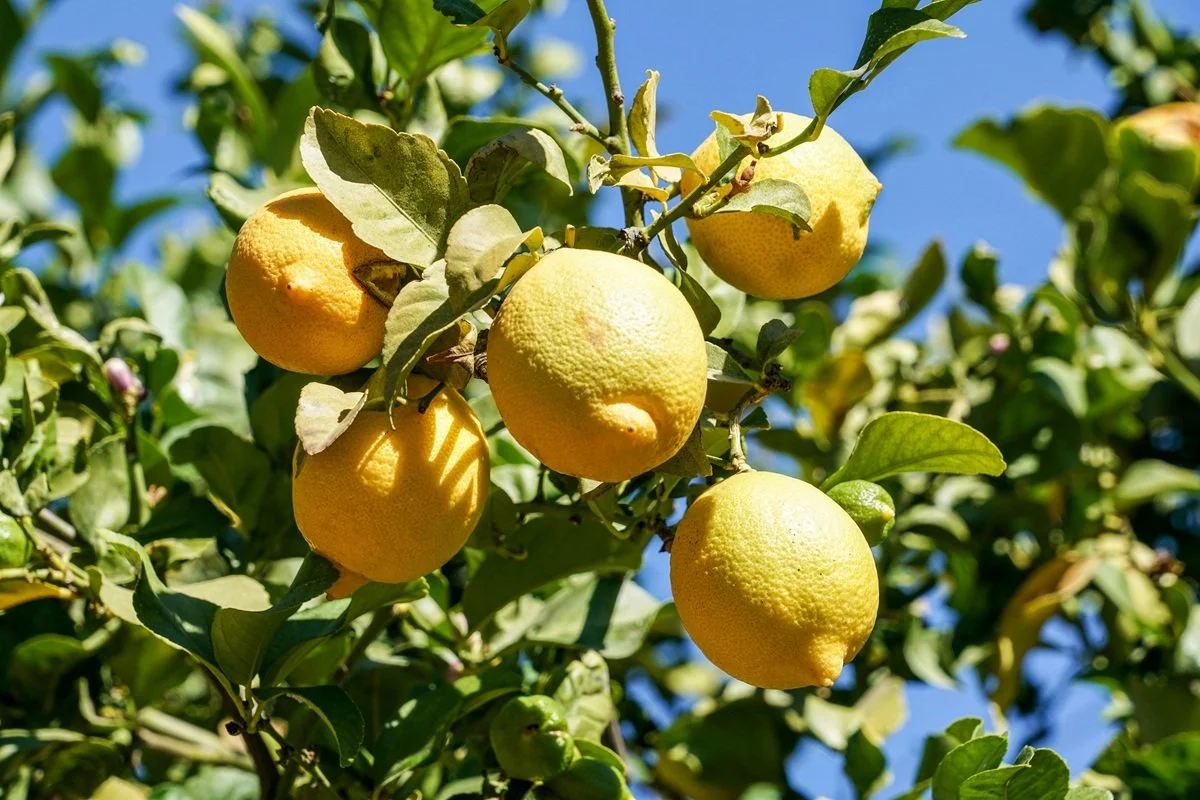
Oh. But there’s that old man. He’s in the garden, standing at the lemon tree. He’s alive. There’s a white dressing taped to the side of his head. When he sees me, he holds up a lemon. My face splits into a mad smile. Nice lemon, I call out. Crying and singing all the way up the street. ▼
Image: Marian Florinel Condruz - Pexels
This story appeared in Island 172 in 2023. Order a print issue here.
The Olga Masters Short Story Award is administered by SouthEastArts in partnership with the South Coast Writers Centre and is supported by the Masters family.
If you liked this piece, please share it. And please consider donating or subscribing so that we can keep supporting writers and artists.