
That was where we’ll meet – by Kyla St Jaye
ISLAND | ONLINE ONLY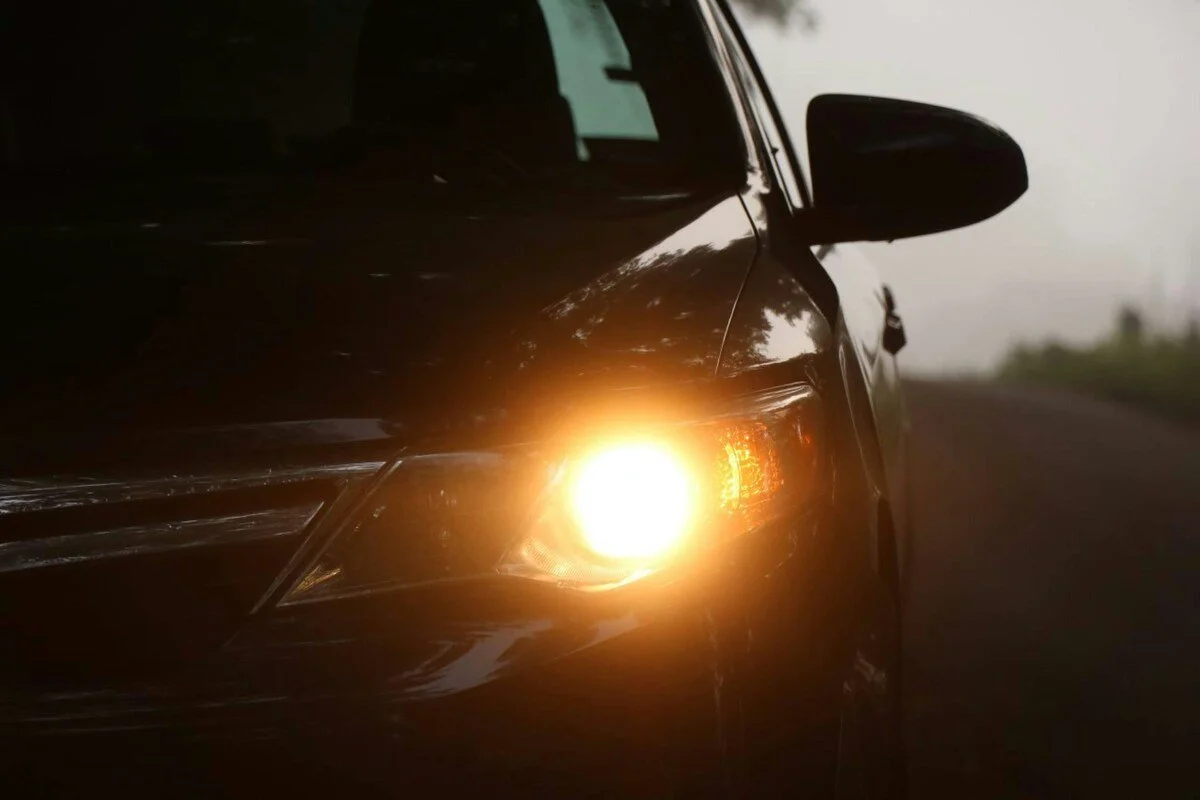
That night it rained big and wild. Her sister called 14 times while my bedroom walls sweated and the windows leaked. Alice Springs was airless, wrapped in sheets. I dreamt in the damp. Dreamt spit-coloured. Thick as plexiglass that held me in remand while my hand bled out. In the cell, when they dropped in a ziplock bag with a wet bar of soap and used toothbrush, one long dark hair hanging from the bristles. When there was nothing left. I leant my forehead on the outline of a flag carved in the wall, almost as small as my daughter’s hand, with the words scratched beneath STAY STRONG. And I couldn’t. In the wide bar of light that never turned off and made a low electric moan that buzzed in time with my phone, as her sister called and called again until I finally answered.
‘They locked her up,’ her sister said from the other end of the phone.
‘Me?’ I said between the haunting and the rain, ‘I can’t. I can’t go back.’
There was a long pause. Now I was awake.
‘What are you saying? They got Mahlia.’
Mahlia made of bird bones.
Forty kilos. Five foot nothing. Mahlia sings gospel in Warlpiri. With a keyboard stand in front of her, and the Tanami Desert unwinding behind. Mahlia plays piano with her eyes closed. Her feet bare in the red dirt at Yuendumu.
Mahlia where the world unwound.
On my front steps, unrolling stars. She takes rocks from my garden to hold each corner of her painting flat. We take photos. Record the length and breadth. Mahlia traces Jukurrpa, her mother’s Dreaming, which she’d painted in black and white.
She tells me, ‘Write about my mum, there, on the back of the painting’. She shrugs. ‘They like it when we give them a story’.
She stubs her cigarette out on the concrete step and pops the leftover half in her pocket. We sell her painting online to my friend overseas while our kids play in my half-lit carport in the puddles, in the rain.
Mahlia underwater.
She shivers on the edge of the pool and calls out for a towel. I wrap it round her, where her backbone rises, hard and imprecise. She smells chlorine-sharp, cigarettes and skin. I hold her in the bright blue towel. She rests her hand on mine.
That night, in the haunting, when it rained big and wild, I wedged the phone between my cheek and shoulder and listened to her sister breathe. My own breath echoed back to me in the dark.
‘Where is she now?’ I asked.
‘We don’t know,’ her sister said. ‘They might take her to Darwin.’
‘What do you need me to do?’
‘Nothing. I don’t know. Can you find out where she is?’
‘What happened?’
‘The police,’ her sister said, ‘you remember the big fella with the tattoos?’
Mahlia in the headlights screams, ‘I’ll fucken kill you!’
Mahlia slams a crowbar in the dirt.
‘Can you find her? Find Jacinta too. You remember that baby’s mum? They got her and Mahlia locked up.’
‘If I can.’ I chewed my lip. I knew I couldn’t. ‘Tomorrow. I’ll try. I’m not family, so they might not be able to.’ I knew that wasn’t the reason.
‘Yeah tomorrow, try. Call the police,’ she said. ‘For us?’
Her sister hung up the phone.
I sat on my bed, in the dark, and listened to the rain beat on the tin and glass. I could’ve said something better to her, something useful, given her a flag scratched in a wall that said: STAY STRONG.
It was 3am in Mparntwe. It was already tomorrow. Alice Springs wrapped in sheets and airless in the lightening.
Mahlia in the headlights
Me, in the light that never turned off
doing time when there was none
I couldn’t call the police. I couldn’t sleep. I sat on my couch watching the storm break the sky with light. I couldn’t. Not for her or for me, I was in mud time. Erase me time. I sipped black coffee on my couch and thought about the dark.
I remember the Senior Sargeant that Mahlia charged at. The tattoo winding the length of his arm. His had river-shot eyes, worn raw and wide from night shift.
Weeks ago, when he stood right here, towering over me in my loungeroom. When I hadn’t vacuumed. He pushed crumbs around the tiles with toe of his size 12 boot and shifted so the ceiling fan wouldn’t clip his hat.
He watched as his partner, with her blonde ponytail, read me my new charges. He watched as I cried on the couch. His lip twitched. He rolled his eyes. I dug my fingernails into my palm, like I was gripping a crowbar.
‘Mate,’ the Senior Sargeant sighed, ‘you gotta understand, we have a process to follow.’
And I tried. Tried to follow his process, tried to follow his river-shot eyes out the window into the broken dark, where the ambulance flashed red then blue and pulled out of my driveway. My teenage daughter in the back, on her way to the Mental Health Unit. Through the window, in the beginning of mud time.
#
I spent four months in the mud. Crocodile still. I refused to turn the lights on in my house and used little battery-operated lanterns to keep the dark soft. Bare and flickering, I held my mouth in a thin tight line as the weeks rolled by. This was invisible. That was bones on the sand. The river receded. There I was, I could almost remember: the lawyer, my court appearance (when I didn’t show), the Case Manager from The Department (when her checklist assessed how dangerous I really was). When I wouldn’t leave the house and kept the curtains closed, kept the lights off. Kept the quiet. Kept still in Mparntwe in mud time.
‘You have the right to make a formal complaint,’ my lawyer said. ‘We could lodge on your behalf.’
I think I said, ‘No. Thank you.’
What I meant was: do not move, do not make a sound. I’d learnt that much.
I didn’t hear from Mahlia. I didn’t look for her either. I couldn’t.
I didn’t have the privilege to hang my wound on her, working the knots of my own horror free by easing hers – erasing hers, to atone for mine – by being useful. I couldn’t soothe my shame through her. I wasn’t a social worker or an activist. I had no proof I was a good person. I was on another assault charge. I’d used up all my Section 10s. I didn’t have the privilege to pretend.
I did, however, have the privilege of disappearing.
While Mahlia waited, watched in the cell with the light that never turned off, and my daughter waited, watched in the hospital until her medication levelled out, I hid in my house until I wasn’t seen at all.
#
Four months later. The day before Christmas. My backyard quaked in 44-degree heat. It hurt to be outside. The sky was too close, lower than I remembered, opal blue too bright, run with rust-coloured cliffs and burned. I pulled sun-chewed towels off the line and threw them stiff over my shoulder. I was lobster pink, sweating and exposed, as I ran across the patches of hot dirt and lawn that wouldn’t grow. The colours were too intense, uncontained. It was hard to be invisible. And easy to forget.
Inside, I dropped the towels on the couch and dropped into the shadow letting my bare feet cool against the tiles and turned the air conditioner as high and hard as it could go.
Her sister tapped on the window.
‘You good?’ she said. ‘We got this baby up at the Red House and no power!’
The baby was about eight months old. She slept in her sister’s arms, sweat beading across her small face.
‘You can’t get a power card?’ I asked.
‘No. nothing.’ She said, ‘Nothing’s open for Christmas. Can we stop here until it cools down?’
Behind her, six more family members stood waiting, all girls and women who’d walked to my place from town camp, from the Red House that ran on prepaid power. My air conditioner blasted and the fans churned the loungeroom air. I looked at the unpaid power bill stuck to my fridge stamped red: Final Warning.
‘Yeah, come in,’ I said. ‘Go for a swim, if you want. Grab a towel.’ I looked at the baby sweating in her arms. ‘She’s so beautiful. We can put her in my bed, under the aircon.’ I looked at her. ‘If you want.’
We made a soft barrier of pillows for the baby, settled her on my bed in a pale blue sheet. Her sister kissed the baby’s tiny forehead.
‘You coming for a swim with us?’ her sister said.
‘Nah, you go. I’ll finish cleaning up. I can listen for baby.’
She reached over and grabbed my hand. ‘Thank you.’
I watched her from the kitchen window, my hands in the sink full of suds and lemon. Her sister slid into my pool, with her family, without Mahlia, and swum in the sun. And in that moment, I let myself forget.
My phone buzzed on the kitchen bench.
It was a private number. I knew what this meant.
‘Do you remember?’ the officer said.
I hung in the static. I’d forgotten. I was in mud time. I gripped my phone and held my breath.
‘We’ve looked into the matter,’ the officer with the blonde ponytail, who read me my new charges said, ‘and found there’s nothing to investigate. We’ve closed the case.’
On the day before Christmas, when it was so bright and hot I couldn’t remember the rain, the officer on the other end of the phone barely paused and said in her Making-A-Difference voice, ‘We do apologise for any additional stress this caused and wish you and your daughter the very best. She has so much potential.’
I exhaled in the narrow space between relief and guilt.
I think I said, ‘It’s ok.’
I might have said, ‘yeah. thank you.’
#
Three weeks later, on a date that didn’t matter so much to anyone else, Mahlia appeared on my front steps.
Mahlia with the sun on her face
Mahlia on parole
She lifted her tracksuit above her ankle monitor. It looked like the trackers they put on birds’ feet to follow their arc of flight.
‘I can’t stay long,’ she said. ‘They’re watching. I just wanted to see you.’
The afternoon slowed, turning the sky the colour of burnt honey. In the quiet, and the heat, we walked through the backyard across the patches of dirt, holding hands.
‘I wanted to see you too,’ I said.
I sat on the edge of my pool with my legs in the water and listened. Mahlia next to me, one leg in the pool and the other slung on the pebblecrete, keeping her ankle monitor dry.
‘I’m sorry,’ I said. ‘I’m so sorry I didn’t come find you.’
Mahlia looked at me, confused. ‘Why? There’s nothing you could’ve done. I didn’t need you to find me.’
Mahlia’s eye was swollen with a deep nick on her cheekbone where the skin split open. I held my fingertips softly on her face.
‘I’m ok now,’ she said. ‘Where’s your daughter?’
‘At her grandma’s, near Sydney. She’ll be home soon.’
Mahlia lit a cigarette, took a quick drag and handed it to me.
‘Will you take us to church on Sunday?’ she said. ‘If my lawyer says yes? We could go to church together. Just me, you and maybe my daughter? You bring your daughter too, if she’s back. There are heaps to choose from and they’re all good. We should go to the one up on High Street though where we can sing real loud.’
‘Oh. I dunno,’ I said. ‘I haven’t been to church since I was a little kid.’
‘Really?’ Mahlia said. ‘But you don’t drink.’
‘Well, not anymore.’
‘Let’s go, then!’
‘I’m a terrible singer.’ I said, ‘I’ll embarrass you.’
‘You’re alright,’ she said, squeezing my hand. ‘I’ll teach you. When I ask my lawyer, we’ll go.’
Mahlia walking home with the sun behind her
making her a shadow and making her shine.
I slid into the pool fully clothed. Underwater, I was weightless. Without the weight of how much I loved her. Without the want, and where I wanted. And where it wore me to the bone. I floated on my back, suspended on the water, my wet shirt unwinding around me like a second skin. The desert sun set orange, iridescent, then darkened. The police sirens echoed through the streets in real time. ▼
Image: Dawit - Unsplash
If you liked this piece, please share it. And please consider donating or subscribing so that we can keep supporting writers and artists.