
Heartbreakful – by Siobhan Kavanagh
ISLAND | ONLINE ONLY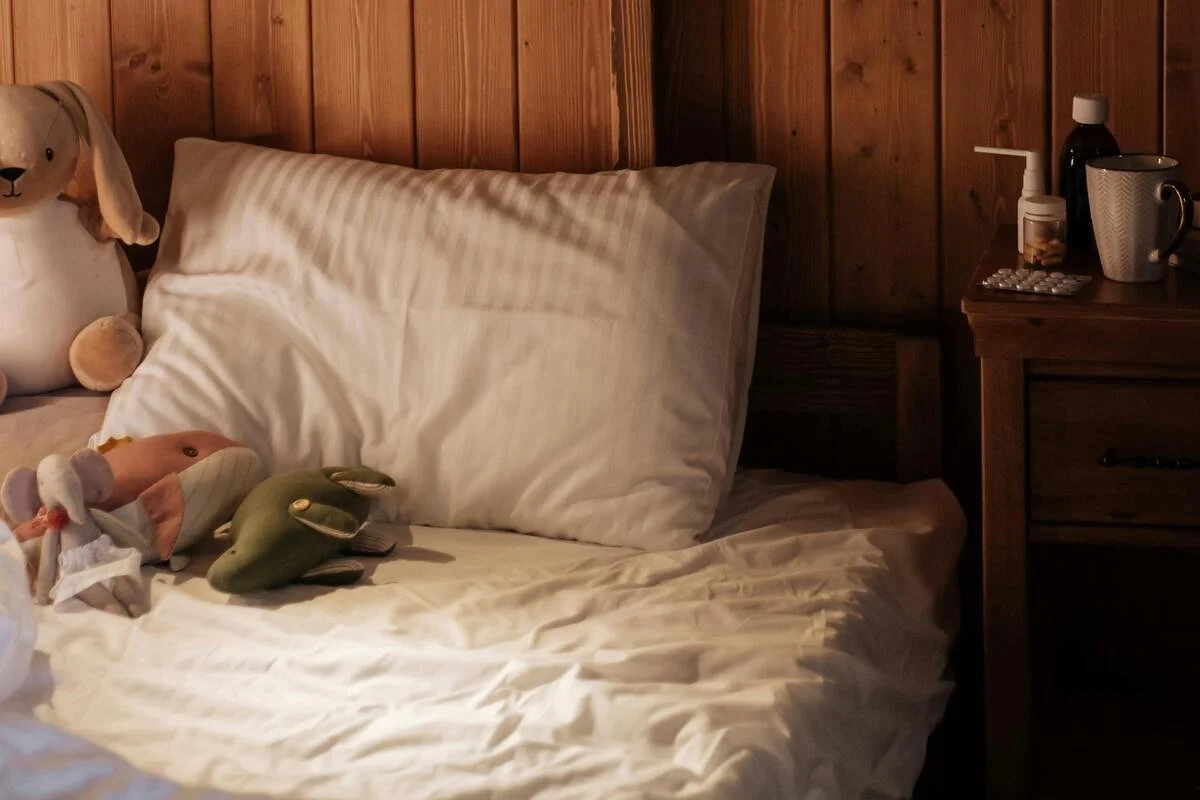
I should have paid more attention in science. This small, overheated room in the children’s hospital is full of words like exons and introns, full of our quiet desperation for an answer. The genetic counsellor tries to make it simpler, explaining that genomic sequencing is like looking through each chapter of a book for spelling mistakes. And if we sign this form, they can look through each chapter of you. They will search for a spelling mistake that could explain this inexplicable pain.
My year nine science teacher did teach us about DNA, but the details seemed unnecessary then. I wasn’t to know that it would become important, years later. I wasn’t to know that pain would march a searing, stabbing path of destruction right through you, a small child.
I sign the form. I walk with you down to the pathology clinic so that your blood can be drawn, and I wish we didn’t have to do this. I am sorry, so I swing your hand and I think about the year nine science teacher, a tall, lumbering man, softly spoken. Grey hair and beard. He wore woollen vests and a tweed jacket, and he seemed resigned to his fate of trying to educate restless 14-year-olds. He was forever telling us to settle down and listen, in a quiet voice that faded over the first row of desks.
You do not want the blood test, and I can’t blame you. There is pleading and negotiating, and finally I have to restrain you for a moment, and I am sorry. I wish we didn’t have to. It does help to simply think of something else, I tell you. I think of when the science teacher, finally fed up, banged his hand on the bench and called us rabble.
‘We are not rabble,’ we protested.
‘You’re right,’ he said, a small smile hidden under his moustache. ‘You are, in fact, made of star stuff.’
The sun is bright through the windows of our house. A prison, nonetheless. The high wooden fence may as well be electrified. The tall pine tree out the front is our watchtower – no one in, no one out.
The rhythm of these days – too many to count, now – is different. The clock doesn’t seem to apply to us anymore. We are caught in some subterranean timescale, moving beneath the surface of ordinary life. Pain is the only demarcation of our time.
It is a time for tending to you, for willing you to sleep and hoping we wake up tomorrow to find it was all a bad dream. A time for endless days at home, for appointments, for assuring you that this won’t be forever, though we have no idea if this is true. A time for ignoring how long the television has been on. It is, I suspect, the time you realise that your parents cannot fix everything. We had hoped this realisation would come a little later than age seven.
Time might be the best diagnostic tool, one well-meaning doctor told us. New symptoms may emerge and point us in a particular direction.
How to pass the time, he didn’t say.
They say you shouldn’t consult the internet about medical issues, but of course we do.
It is a cavernous space, full of questions and mysteries about our bodies and the ways they hurt or fall apart. A twilight zone of aches and pains and fears.
Have you thought about –
You just need to –
My friend had this but she –
Just wondering, are you better now?
On a grey December day, we explore a rockpool barefoot. The wind picks up, whipping icy air through us and all colour drains from your face.
I wrap myself around you and try to give you all my warmth, but it is not sufficient. Nothing, we are learning, is enough. Shivering, you ask me if all of this is ‘heartbreakful’. I can think of no better word, real or made up. The pain that stalks you must be connected to my heart because it is, by now, thoroughly broken.
There must be some way to correct this unbearable state – the correct temperature, the correct medication, the right diagnosis – but no one knows. With each dead end, each useless appointment, our world shrinks. The pain expands and takes over more territory, swift and quiet. We watch it warily; we don’t yet fully understand its ways or how to placate it.
One day, the hairdresser asks me how I am. I can’t say everything is heartbreakful, so I say I am good. A small, solid word. Good is standing with its back to a swelling dam, hoping it will not flood.
Things that should be straightforward to keep alive start to die: the basil has shrivelled, the jasmine creeping up the brick wall in the backyard has become dry and brittle, our second round of sea monkeys, gone. I tip the murky water from their plastic tank down the laundry sink, and lie when I say we will buy some more one day.
The dog develops a critical liver problem. I tell her she can’t die, not now, because you need her. But she does die, as dogs do, at the most inconvenient times. I wonder if the pain has tentacles, poisoning all living things in reach. The vet gives us little plastic zip lock bags of her fur to take home. We place one on your bookshelf. Swirls of grey, white, black. The house is quiet without her – no tapping of claws on the tiles, no sound of her ‘puffing,’ as you say of the way she used to exhale when she cuddled into you.
We talk about future dogs, in a future time.
At the museum, a wallaby watches us with small glass eyes, suspended in time. Its fur is a little moth eaten, which you tell me is unfair because it has no way to defend itself. We move on to butterflies pinned in frames, and geodes cut open to reveal colourful innards of crystal. We talk about the different fields of study, the type of scientist you could be. You ask if there is a type of scientist who understands how pain is made, and, more importantly, how to destroy it.
There is a tiny, darkened theatre room with an installation of Bunjil, a place to rest, as you are getting tired. Bunjil’s wings move hypnotically up and down while green light washes over the plumes, shifting to blue, to yellow, to orange. A deep, crackling voice tells us of Bunjil’s laws and of Waa, the protector. You tell me you believe in Bunjil and Waa, as well as Thor and Jesus and dragons.
Perhaps it is time for gods and holy water.
On the way out of the museum, I see a toddler that looks like you did several years ago. The you before this you, who knew pain as a scratch, a graze, a tumble. Things that could be fixed with a cry and a Band-aid. I wish I could hold this small you again and fend off time, defend you from this pain. Brush you off, all better now.
We try to make things nicer. A little basket for all the packets of medication. A little blue and white patterned pill box to take with us when we go out. But after a while, it is determined that none of the medications in our little basket are working. I take them to the pharmacy to dispose of, and the pharmacist is almost in tears herself.
I want to stop her from crying so I joke that I could have sold the unopened oxy for good money. We never wanted it in the first place but had filled the prescription out of fear of the pain, out of fear of having no way to combat it. The bottle sat in the cupboard, our break in case of emergency, but then in time we realised that this is a constant emergency, long and slow. No lights and sirens. Only the faint, green glow of your nightlamp as lacerating, burning pain tears through your feet and legs. Only the sound of children’s meditation stories, on repeat, a soothing disembodied voice that takes over when we have run out of our own words.
Another appointment, and this time my job is to distract you from what appears to be a form of torture as a doctor zaps your legs with a device to test the responses of your nerves and muscles. The doctor’s face is familiar. After a few glances, I ask her if she studied French at University of Melbourne, 20 years ago. She smiles and says she did, and that she thought she recognised me from somewhere too.
I pat your hair and tell you it’s nearly over, though I have no idea if that’s true, and I wish this wasn’t necessary – I am sorry – so I think instead of the sandstone buildings of the university, named for long dead academics. I think of you there with me, as though I can somehow transport you away from this. Turn around, take in this place. Long before you were born, I spent so much time here. You would love it. The enormous library and soft green lawns to lie on, carefree. The giant, burnished orange leaves gathering on the paths. The delightful crunch of the leaves underfoot (here, in my mind, you are walking and skipping and jumping). I hang back, in this memory where you never were, and watch how you move freely, watch you with no pain. All I want is as simple as that, as unfathomable as that.
The zapping stops, and the doctor informs us the test is over now.
You say you wish you could float in thin air. The best I can do is the warm rehab pool at our local leisure centre. Long ago, but not so long ago, we watched you float before we had even seen you. The ultrasound image showed you moving languidly. You delighted us.
Elderly people slowly push through the heated water, completing determined laps up and down the length of the pool. Support workers hold onto people and guide them through the water. You hold onto my shoulders, your small nose touching mine, your legs stretched out and weightless, painless.
I try to negotiate a truce with pain, but it does not follow any rules of war.
For now, we float.
We receive an email to say that your blood sample is now being analysed. The genomic sequencing will take six to twelve months, which is, essentially, forever. They tell us you will be immortalised, in a way – from your blood sample, a cell line will be kept alive indefinitely in their laboratory. As science advances, someone in the future may be able to reanalyse your chapters if necessary. I wonder who will look after this cell line, this tiny piece of you.
There are thousands of possible genetic defects, thousands of ways in which we are differently constructed. Perhaps, somewhere in the book of you, they will detect a reason for the pain. But there are so many things about you that cannot be detected by any test, things that have no exons or introns, like a certain smile when you are trying to lie, your love of pastries, your right-handedness. The way you draw faces, the way your written b and d still sometimes interchange. Your delight in patting dogs, your excellent imitation of a magpie’s call and the sound of your breathing when the pain has finally allowed you to fall asleep. Your knowledge of Greek heroes and your concern for a moth-eaten wallaby. Your Lego construction of your pain, a fortress of multicoloured bricks with spears and knives and flames sticking out of it. You tell us you will smash it with a cricket bat when the pain is gone.
You are made of star stuff, you are perfection. ▼
Image: Ron Lach - Pexels
If you liked this piece, please share it. And please consider donating or subscribing so that we can keep supporting writers and artists.