
The moss garden method – by Gina Ward
ISLAND | ONLINE ONLY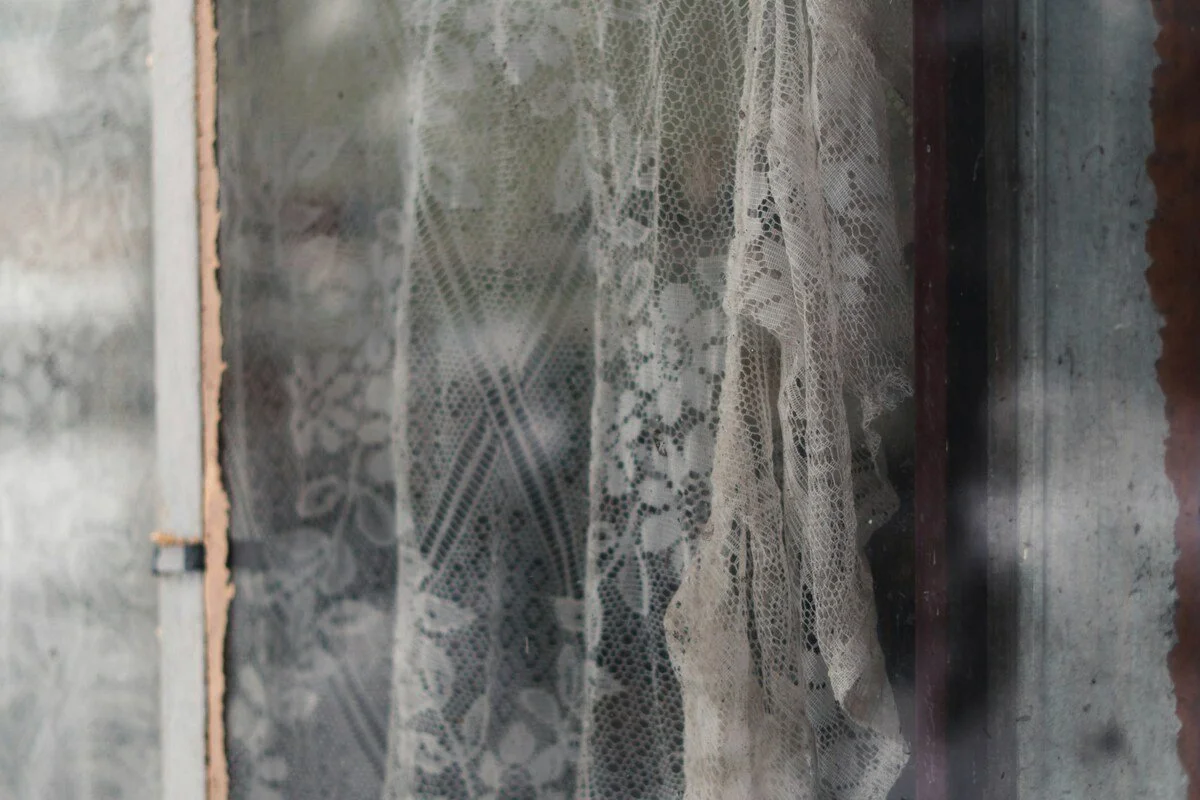
I once did a quiz on whether I had an inherited tendency to depression, because I was sure I’d ace it. Five of the six people directly above me on the family tree – father, mother, mother’s parents and father’s parents – had what my girlfriend calls head weasels. Two of them died by suicide, two died of dementia and the fifth, in my opinion, died of grief a few years after one of the suicides, although the official cause of death was pneumonia.
The sixth was Nanna, my father’s mother.
When I was a kid, I used to go and stay at Nanna and Grandpa’s house, which effectively meant staying with Nanna. The house was layered with time – tall vases of rustling penny-farthing leaves and small vases of plastic roses, lace curtains barricading the windows, a chicken egg cup from an Easter egg. Nanna dried lavender, put it in bags and put the bags between the handkerchiefs that filled her bedroom drawers. She kept everything and gave me gifts from her magpie hoard – a blue glass brooch or a postcard of the actress Zena Dare.
At family gatherings, Grandpa would keep the conversation moving while Nanna brought soup and roast chicken and jelly trifle to the table, and afterwards he’d sing us old songs about sad children whose dollies had died. Between family gatherings, he mostly sat on the verandah, sometimes reading the paper and sometimes gazing inscrutably at the fig tree that occupied most of their small back yard. I was allowed to climb onto his knee and slide a bronze farthing in and out of the coin case on his watch chain but that’s as far as his grandparenting went.
There was no TV at their house. Instead, Nanna would pull out the bottom drawer of the sideboard in the lounge room and show me her treasures, including a three-dimensional satin Valentine’s Day card still in its box, cartons of costume jewellery, and an album of postcards sent to her over the years by the girls at the factory where she was working when she met Grandpa. After that we would sit on the slippery black horsehair sofa and make scrapbooks out of Christmas cards for the sick kiddies in the Children’s Hospital while Nanna told stories about people called Rose and Hermann and Uncle Jack who chewed their food 60 times or had accidents with the outdoor dunny or beautiful weddings. She was the only person on my family tree who ever said much about what their life had been like before they became my grandparent or parent. Rightly or wrongly, I connect this to the fact that she was the only one with no visible head weasels.
The high point of my weekends with Nanna came when we went to the Prahran market for her weekly shop. She had a special route – down a particular side street where there was a house whose front garden was made entirely of moss, plump green cushions misted with long brown filaments, then across a park with a monument-cum-bubble tap that she admired. On every visit Nanna would point out the cherubs on the monument and marvel at the rectangle of moss with as much pleasure as if it was the first time.
I’m the sort of person who’d usually scorn those tea towels that tell you to ‘grow where you’re planted’ but in fact I like them because they remind me of Nanna and her moss garden.
***
After Grandpa’s death, Nanna moved into the Freemasons aged care home on St Kilda Road. She came for a visit every Saturday bringing copies of the Women’s Weekly which she stole from the Freemasons lounge, posies of flowers which she picked from other people’s front gardens, and half a dozen cream buns because we’d once said we’d liked them.
My mother endured the cream buns, grimly turning them into trifles or French toast to use them up. But later in the afternoon Nanna would try to give her the money she’d set aside for her grandchildren when she went into aged care and at that point my mother would always lose it, not just refusing the money but arguing and raising her voice and crying, things I’d never seen her do before. Then when Nanna left, my mother would tell me all over again that we couldn’t take the money because Nanna was supposed to give it all to the Freemasons and it was wrong of her to hold some back.
It would’ve been hard to side with Nanna against my mother and I didn’t really want to. Nanna was growing where she’d been planted, just as she’d always done, but I found myself wincing at the inevitable cream buns and the clichés she trotted out over and over. (‘The Queen picks her chop bones.’) In my last memory of her, Nanna has me cornered in the hall on one of her visits, holding out a ten-shilling note. When I protest, she pushes it into my hand, saying, ‘Oh, go on, get yourself something nice.’ I can’t bear to look at her because she’s so skinny that her clothes hang loose and her pink singlet peeks out of the neck of her dress. I hate the way her knuckly, spotted hand is clutching my arm, so I pull away and run upstairs to my room.
She needed me to be an appreciative little kid. I needed to be a touchy teenager, and time was on my side. I get that, but it’s not a good memory.
I don’t remember much about Nanna’s slow death from bowel cancer, except that she used to pick out the pills she didn’t like the look of and flush them down the loo, infuriating my science-trained mother. But I remember her funeral, mostly because of the surreal moment at the end of the service when Nanna appeared to rise from the front pew and totter down the aisle on the minister’s arm. The apparition turned out to be Nanna’s sister, Alice. I’d never seen her before because the sisters hadn’t spoken for decades after a dispute about a Christmas duck. (Apparently Alice had promised Nanna the best of the ducks she was raising and then tried to sell her an inferior one.) Alice took centre stage at the funeral, eclipsing my mother who had reluctantly become Nanna’s main carer, and then disappearing as definitively as she had appeared. I never saw her again.
***
In my twenties and early thirties, I used to tell the story of Nanna turning up at her own funeral as a party piece, but apart from that, I didn’t really think about her until I was in my late thirties, trapped in a flat with chronic fatigue syndrome (CFS), getting through each day five minutes at a time. I noticed I had a habit of finding something to enjoy every few hours – a taste, a line in a book, a certain slant of light – wondered where that habit came from and eventually, in the meandering way that goes along with CFS, traced it back to Nanna’s moss garden.
In the process I realised that, like Nanna, I’ve always had special routes that I stick to (past the house with a tower room, across a park), special possessions that I admire on a regular basis (a spotted candlestick that my old mate Danielle gave me, a small scarlet Lucky Cat from Vix) and special food for special occasions (yum cha after a night of insomnia, pasta with tuna and asparagus when I’m eating on my own). As a kid, I’d followed Nanna round like a duckling, imprinting on the way she did things, and somehow, without noticing, they’d become my way of doing things too.
Remembering the moss garden changed the way I remembered Nanna. The family I grew up in mainly consisted of clever, articulate people and in my teens, I’d decided Nanna wasn’t as clever as the rest of them because she talked in clichés and was resigned to a limited life. But none of the others had ever said or done anything that equipped me to deal with the five years of CFS that followed my mother’s death (the second suicide). If I redefined cleverness in terms of survival skills, it was starting to look as if Nanna might’ve been the cleverest of the lot.
Having underestimated Nanna, it was tempting to restore the balance by idealising her. As an experienced reader, I would’ve found it easy to come up with a story in which she was a working class hero – simple and direct, avoiding the compromises made by her son (who went to university and became a chemistry lecturer) and her husband (who worked as a doorman and took on the mannerisms of the lawyers he opened doors for). In that story, Nanna’s clichés and minor crimes would be calculated challenges to my mother’s upper-middle-class protocols, and her unconditional love would’ve simultaneously shamed and redeemed us all.
But Nanna wasn’t really like that. There was nothing calculating about her and I can’t say for sure that she loved me. Love is a very small word for all the varieties of human experience it’s required to cover, and when Itry to apply it to Nanna’s particular combination of blinkered loyalty and hair-trigger resilience, I feel as if I’m selling her short. I was important to her, though. I never doubted that. One of the truest things I can say about her is another story I made up.
In this story, I go to her house and say, ‘Nanna, I killed someone’ and she says, ‘Oh, dear, dear. Wait a minute, I’ve got some money put by. I could’ve sworn it was in this drawer – no, here it is, and take my rings too, you’ll get something for them. Now, now, there’s no time to argue. Go straight to Rose, she’ll look after you for a start, and here’s an apple for the train. If there’s anything you need, just drop me a line. And if you can’t be good, be careful.’
I know it would have been like that.
***
Once I started to see Nanna as a person in her own right, I finally realised she’d had a hard life, much harder than I’d let myself know. As a kid, I took Nanna and Grandpa’s relationship for granted but when I look back, I can’t remember the two of them ever occupying the same space except at meals or when the neighbours came to play cards. They even had separate bedrooms because, as Grandpa explained more than once, Nanna snored. It was true. I found that out for myself after Grandpa’s death when I went with Nanna to the Lorne guest house where she and Grandpa had gone every year. But it was the only thing I ever heard him say about Nanna and he didn’t smile when he said it.
Grandpa, the doorman, had the same ambiguous social status as a butler in a British TV series. From an adult perspective, his exile on the verandah starts to look like the outward expression of an inner conviction that he could’ve done better for himself than marrying a factory worker who talked in clichés. From the same perspective, Nanna’s ability to grow wherever she was planted starts to look like the kind of resilience that has its roots in resignation. She wasn’t just making the most of a limited life, she was making the most of a life full of incentives to despair. Her marriage was joyless. She hadn’t spoken to her sister in decades. She’d lost touch with the friends from her factory days. Her only child killed himself in his late thirties and her husband died of pneumonia or grief.
But one of the reasons it took me so long to notice that Nanna had a sad life was that she didn’t see herself that way. After Grandpa’s death, she cut out the pictures on the sympathy cards for the Children’s Hospital scrapbook, moved to the Freemasons Home and set up a new routine. I saw the part of it that involved pinching magazines from the Freemasons lounge and flowers from our neighbours’ gardens and repurposing them as gifts for our family but I’m sure she had other routines that got her through the rest of her week. When her only son died, she might’ve cued people to see her as an object of pity but she never did. My mother didn’t either, but she had a principled belief that looking sad would be seen as criticism of my father and it wouldn’t have occurred to Nanna that there were principles at stake. She would’ve just been keeping on keeping on.
***
I think about Nanna a lot these days, because I see her face when I look in the mirror. Getting older seems to have brought out a resemblance that wasn’t there when I was young and she was alive. Time keeps drawing my attention to different aspects of her – the ideal grandmother, totally child-oriented; the daggy older relative; the working-class hero, secretly smarter than all the articulate, educated people around her; the survivor, stoically enduring her isolation and her husband’s disdain. Now we’re old women together and Nanna’s one of the people – dead and alive, known and unknown – who I consult about how to be old.
I’m not saying I’ve finally nailed her. Like everyone else, Nanna’s impossible to sum up. I decide that loyalty was her core value – then remember that she didn’t speak to her sister for 30 years. I face the fact that I let her down when I was a sulky teenager – then remember that we went to movies and musicals together well into my teens, sharing a packet of Fantales and describing the show to each other on our way home.
I can’t even sum up what I owe her. My mother loved Eleanor H Porter’s Pollyanna, where the heroine learns to play the Glad Game when she finds a pair of crutches in the missionary barrel at Christmas instead of the doll she wanted. (The trick is to be glad you don't need crutches.) But Nanna wasn’t that kind of optimist. She was drawn to moss gardens by instinct, not on principle, although somewhere along the line she must’ve trained herself to follow that instinct. And because I followed her round like a duckling, she trained me too.
During the COVID-19 lockdown, I had occasional bouts of survivor guilt because I know how to make the most of confined conditions but I don’t know how to pass that knowledge on. Nanna never told me what to do; she probably didn’t even have words for what she was doing. I just watched her and internalised what I saw. Much as I love the idea of writing a self-help book called The Moss Garden Method, I can’t see it happening anytime soon.
At the same time, I’m convinced that my ability to identify metaphorical moss gardens protects me from the worst of my family’s head weasels. Nanna’s the only one of my parents or grandparents whose approach to life I deliberately cultivate. I remember her every time I move to a new place and start looking for the best way to walk from one place to another. I remember her every time I pick my chop bones like the Queen. I remember her when I look at all my treasures, displayed on every available shelf, reminding me of other people and other times.
And I remember her when I do a Tarot reading and turn up the card called The Sun, which, according to the Rider-Waite interpretation, means ‘pleasure in simple things.’
Thanks, Nanna. ▼
Image: Eugeniya Belova - Unsplash
If you liked this piece, please share it. And please consider donating or subscribing so that we can keep supporting writers and artists.