
A new literature of exhaustion: David Szalay’s ‘Flesh’ – by Adam Ouston
ISLAND | ONLINE ONLY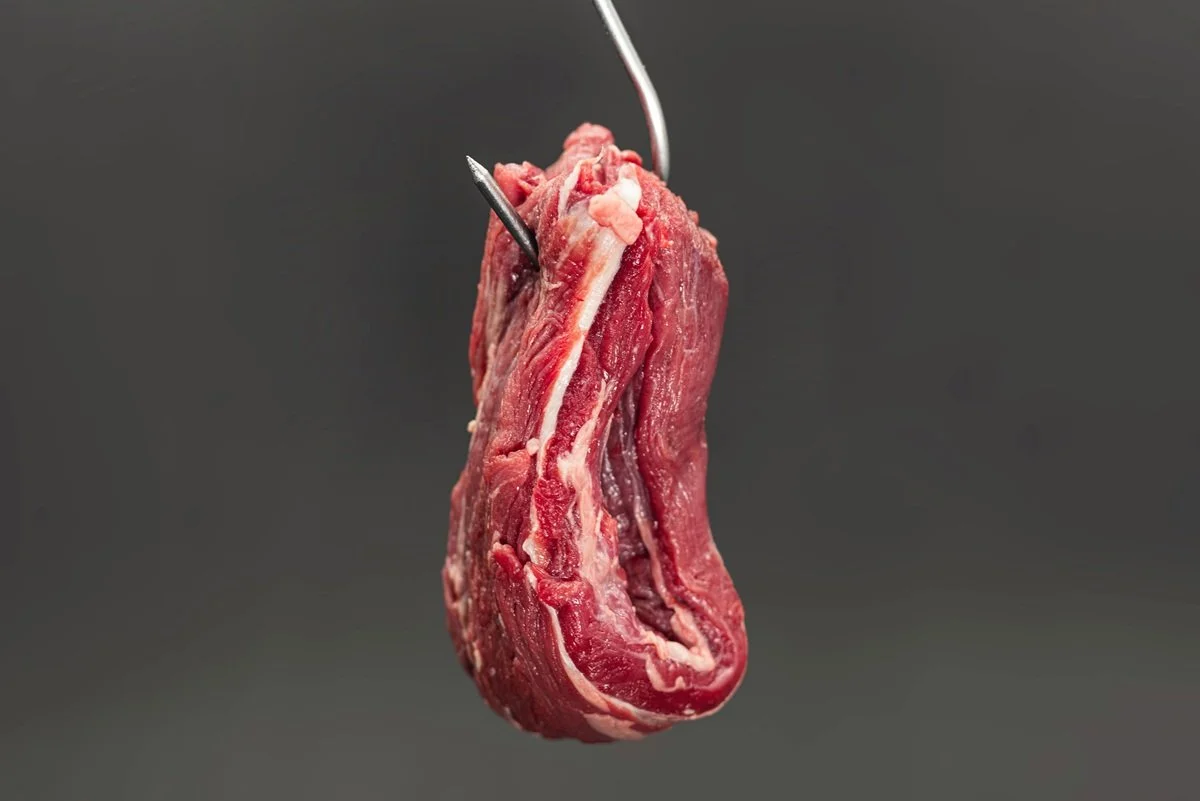
A 15-year-old boy moves to a new town with his mother. There’s no mention of a father or where they have moved from. The lady from the flat opposite asks the mother if the boy will help her carry groceries home from the supermarket. The mother agrees and tells the boy, who doesn’t want to but does as he’s told. The lady’s husband has heart troubles. She seduces the young virgin and they begin an affair. Eventually he confesses his love for her and she tries to break it off and the whole thing ends in a scuffle with the weakened husband. A moment of violence the boy doesn’t understand sees him arrested and sent to an institution.
So go the first 30-odd pages of David Szalay’s Flesh. The prose is lean with only slightly more meat on the bone than a fable or fairytale. Many paragraphs comprise barely a single line. Statements are direct. Description, minimal. It’s a greyscale world exhausted of its vitality. All we know is we’re in Hungary sometime in the leadup to the fall of the Iron Curtain, the mid-eighties maybe, we’re never sure, but this doesn’t quite explain the bloodless atmosphere that extends beyond that to when he can buy a Coke from a nearby Tex-Mex place and, even later, to London.
In John Barth’s seminal 1967 essay ‘The Literature of Exhaustion’, he defines ‘exhaustion’ not in the ‘tired’ senses of ‘physical, moral, or intellectual decadence’, but rather in the spentness of creative expression; in other words, the exhaustion of form. Everything has been done. I’m interested in exhaustion of a different variety, an existential exhaustion in which the subject is deprived of subjectivity in the same way the epoch and landscape are, in Szalay’s hands, drained of their lifeblood. What happens when desire is exhausted but the flesh still speaks? What horrors does it give rise to? The answer is a kind of pallid sex and violence that is all the more explicit for its emptiness.
Framed by five horrible acts of violence (though perhaps six: what happened to his father? The book’s catalogue of mother figures has Freud tapping his foot eagerly in the wings), Szalay’s novel also crawls with carnality. Its title, stamped erect on the glossy cover in thick, fat font, has all the subtlety of a porno. We’re thinking about easy-to-wipe surfaces and fresh cuts of meat even before the first page when István’s schoolmate says to him: ‘Have you ever done it?’
The problem has to do with the self and the other. In her 1987 work ‘Eros the Bittersweet’, Anne Carson frames the propulsive drive within desire around absence and lack. ‘Eros is an issue of boundaries. He exists because certain boundaries do.’ Desire, for Carson, is the longing to transcend the boundary between you and me, the yearning to at once fill and escape the void: ‘Eros moves by the logic of exclusion. The boundary that creates the lover also isolates him’. In Flesh, isolation is not the problem. István is an isolated character. He spies on life. But he is almost entirely devoid of selfhood. His lack of understanding regarding social situations echoes a lack of understanding of himself.
A large part of the success of Flesh is in its spare, Hemingway-esque style. But, unlike with Papa’s prose and his so-called ‘iceberg approach’, where underlying themes and emotions give way to ‘mere’ surface elements, there is little sense of anything at all lying beneath. In the immortal words of one former Australian Prime Minister, István could be said to be all tip and no iceberg. There are very few descriptive passages. We don’t know István’s surname. We don’t know his mother’s name. We don’t really know what he looks like. We’re told he’s strong and that’s about it. We don’t know which town in Hungary he lives in. We don’t know why he and his mother moved there. We don’t know who or where his father is, or if he’s still alive. And if he isn’t, how that happened. Throughout the book, István’s innumerable exchanges with mostly women read like a curated shopping list of stilted, pre-prepared questions and answers, as though a disembodied, Beckettian head appears out of the darkness to deliver their line, only to vanish as the other materialises to deliver theirs:
‘Tell me about yourself István,’ she says to him one day.
‘About myself?’
‘Yes.’
‘What do you want to know?’ he asks.
‘Just something about you,’ she says.
He’s at the wheel of the Mercedes, in slow moving traffic on Piccadilly.
‘Karl says you were in the army,’ Mrs Nyman says.
‘Yes.’
‘How was that?’ she asks.
‘How was that?’ The traffic is moving again and he has to focus on it for a moment.
‘Yes,’ she says.
‘It was…’ He wonders what to say, what sort of answer she’s looking for. ‘It was okay,’ he says.
‘It was okay?’
‘Yes.’
‘What does that mean?’ she asks.
‘What does it mean?’
‘Yes.’
‘It means…it was okay.’
‘What do you mean okay? What does that actually mean?’ she says. ‘When you say It was okay you’re not actually saying anything are you?’
‘I’m not sure what you want to know,’ he says.
‘I want to know what it was like. Stop being so fucking evasive,’ she says. ‘Are you always like this?’
‘Like what?’
‘Like this. Evasive.’
Their eyes meet in the mirror.
The problem is there’s nothing there. The novel’s supreme act of violence – and I would argue, it is violence that, although it almost always happens off screen, holds everything together – is the depletion of its protagonist. Flesh is not so much pornographic in its depictions as in the paucity of detail and subjectivity, and as we know, depriving one of their subjectivity is the epitome of violence. Still, one experiences a spasm of recognition in his emptiness, reminiscent as it is of a modern sensibility, the gooning doomscroll where we see and touch and feel like little but meat.
As Maggie Nelson reminds us in the essay ‘A Situation of Meat’, ‘The transcendent parts of [carnal ecstasy] are not typically captured on film; likely they are not capturable. Pornography leaves us, instead, with the spectacle of the meat’. What you get in porn, as in horror, is the body as meat. And just as Flesh might be the title of a porno (hello Café Flesh), it could just as easily be a slasher flick. Both focus on body parts, the former with a generic, praying mantis insistence on decapitating the male talent while impaling the female. It is a practice which echoes in Szalay’s treatment of his protagonist, who goes virtually undescribed, without a family name, a face, and only a history of telling everyone he’s okay. Helen (above) asks him about himself and gets nothing. He’s terrible at conversation (we’ll come back to this), but that isn’t why he doesn’t tell her anything.
After stints in the institution and the army, where he does a tour of Iraq and returns with an eventually diagnosed PTSD, he finds himself in London working security at a strip club. (Before the diagnosis, he punches a wall and breaks the bones in his hand. When questioned by the doctor, and then his mother, he can’t explain why he did it. As he clenches his fist we are told, ‘He doesn’t know why he does what he does next.’) He’s little more than an automaton with a heartbeat. You could argue the novel traces the effects of the childhood trauma of (maybe) killing someone and subsequent incarceration. But I think that would diminish the power of the book. Besides, there are clues that the emptiness has always been there. He’s unable to speak or act when we first meet him, and he doesn’t grow out of it.
After a random act of semi-heroism – he happens to save a man from being mugged when he wanders down an alleyway – he finds himself recruited by this man who turns out to run a company supplying security to London’s elite. And through that job he finds himself in the employ of a very wealthy electronics man, with whose younger wife he soon begins an affair (see the above exchange).
She invents reasons for them to be together, one of which is a trip to the National Gallery.
‘What do you think of that?’ she says.
‘What do I think of it?’
‘Yes.’
‘Nice arse,’ he says, after looking at the picture for a few moments. He knows it’s not the sort of answer she was looking for, and he’s vaguely aware that he was afraid of saying something stupid by accident, so he said something stupid on purpose.
She laughs in a way that’s difficult to interpret. ‘That’s all you have to say?’ she says.
‘It’s true isn’t it?’
‘Yes,’ she says. ‘It’s true.’
‘What am I supposed to say? he asks.
‘What you see.’
‘That is what I see.’
‘Okay.’
‘Sorry,’ he says.
‘It’s okay,’ she says. ‘There’s no point talking about these things without honesty. About anything.’
He points out that quite a few of the pictures seem almost pornographic.
‘That’s true,’ she says.
She seems to think for a minute, and then she says, ‘Most of the things here are either devotional objects, or more or less pornographic, or social trophies, or some combination of those things.’
‘Okay,’ he says.
These sparse conversations are revealing in that they reveal very little about the people speaking. And yet it is all there. Mrs Nyman’s lines about the exhibition’s devotional, pornographic objects and social trophies are a stand-in for the way István sees women. His urges are carnal, but it is a bloodless carnality; there is no actual desire in them. He has little imagination, and as Carson reminds us, ‘A city without desire is, in sum, a city of no imagination’. His most common response in any given conversation is ‘Okay’. This word must appear on every other page several times over. There’s a sort of existential blackness, a yawning void, in every single Okay.
István is an expression of many problems facing men and their toxic behaviours, but one he is innocent of is assertiveness. He takes up very little space. He isn’t stupid but he doesn’t know a lot. He misunderstands or simply doesn’t understand. We don’t get the sense he’s a particularly good fuck, though in most cases the women he sleeps with are not looking for a good fuck but rather something else, usually security (hence his occupation). In terms of self, he is a void. He has no interests, no obsessions, no preferences, no opinions. There are no existential crises, no fist-shaking at God. His troubles with conversation and imagination mean it is difficult or impossible to connect with people, to transgress the boundary between the you and the me. It also makes him embarrassingly bad at phone sex:
‘I’ve just had a bath.’
‘Okay,’ he says.
‘And now I’m lying on my bed, thinking of you.’
‘Yeah?’
‘Yeah,’ she says.
‘Okay.’
‘And I’m imagining you’re here with me.’
‘Yeah?’
‘Mm.’
‘Okay.’
‘Mm,’ she says again.
He wonders if she’s actually doing what it sounds like she is.
He’s not sure what to do himself. This is the first time anything like this has happened.
This is the paradox at the heart of the novel and István. While the women are objects for sex or caring, he is also an object. Hired muscle. A piece of meat. Mrs Nyman (aka Helen) phases him in as her husband fades out. Marries him. Recruits him. Like the army. Almost like his first lover, the lady with the ill-fated husband. (Did István’s mother also have an ill-fated husband?) Like Barth’s issue with the state of literary form in 1967, any mode of being, of personhood, for István has been exhausted. He doesn’t know who he is or even why he doesn’t know. But while the sense of lack might, in Carson’s sense, be the catalyst for desire, for a purpose, a person, a moment of ecstasy or transcendence, a grasp at subjectivity, there’s no longing in his desire. No passion. Not even desperation. Not even when he loses his wife and son in a motor accident. His carnal acts, rather than being moments of eros or acts of passion, are expressions of the void. This is where the novel is pornographic: István is little but flesh.
Many of István’s acts, the sex he has, the conversations and relationships, are mere reflexes of the body, like the way bloody chunks of freshly cut meat will twitch on the abattoir slab. There’s no transcendence because there is nothing to transcend. Talk goes nowhere. Sex yields nothing. There is no other to desire because there is no self. He doesn’t desire the women he fucks, or the men (there’s a hint regarding an incident at the institution, ‘We were desperate’). If anything, it’s repulsion that attracts him, disgust. But he doesn’t interrogate or try to understand it. When he’s 15 and jerking off to thoughts of the married lady’s breasts, ‘He finds it strange how, at the same time, he can find them slightly disgusting and also be turned on by them’. He just reacts, blindly. Desire itself is on the rack, inert, and as Carson tells us, ‘Desire moves. Eros is a verb’. István remains, but only as an inert object, exhausted of vitality if not virility. The novel ends with him back where he began, in the nameless Hungarian town in his mother’s flat, only he’s 50 years older. Still here. Still. His pain is not suffering, because suffering needs meaning – imagine Jesus as mere flesh on the cross – and in the end his emptiness is his pain and his pain is empty, flooding the landscape and everything it touches with its bloodless violence. ▼
Image: Nyara Aquino - Pexels
If you liked this piece, please share it. And please consider donating or subscribing so that we can keep supporting writers and artists.