
Cold coffee – by Aboubakr Daqiq
ISLAND | ONLINE ONLY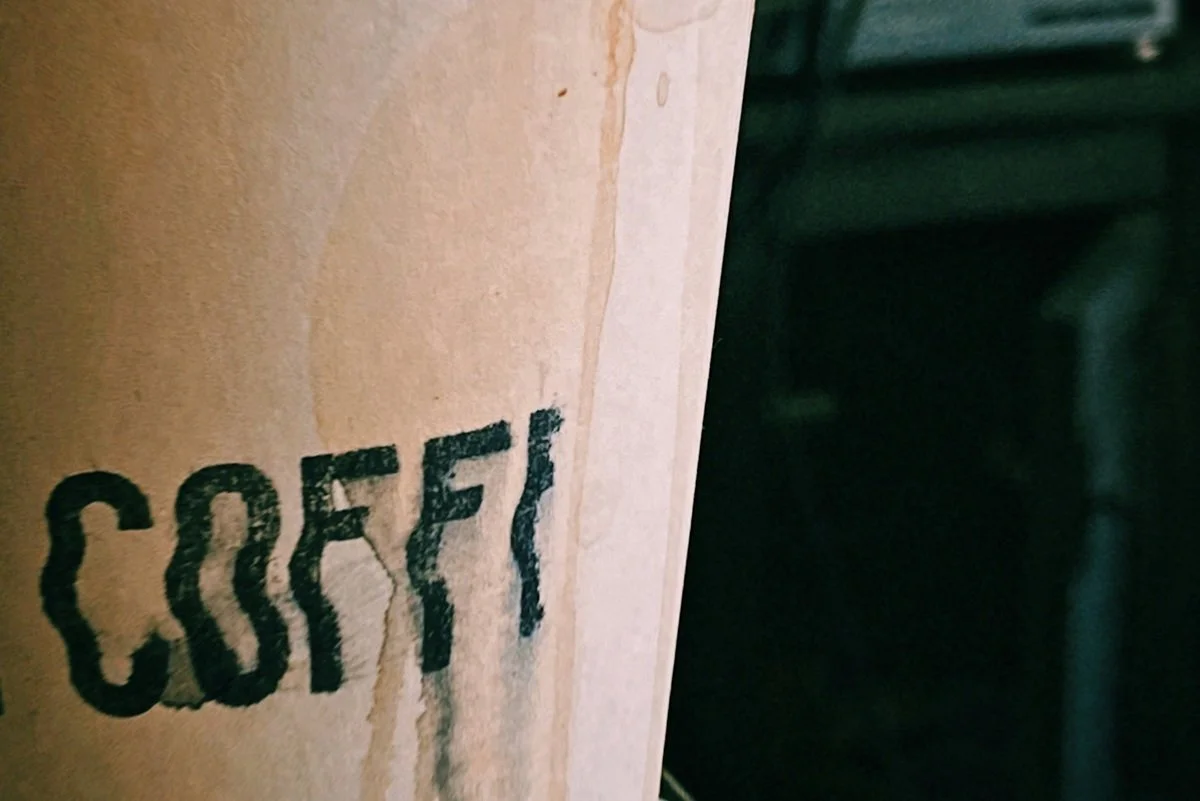
I haven’t always liked coffee. Loved the smell, just not the taste. In recent years, however, I’ve found myself more than impartial towards an occasional morning coffee – especially when paired with a delicious pastry. My poison of choice is the mocha. Often perjured by claims of inauthenticity and childlike nodes, the mocha has long been a victim of slander and ridicule. Putting aside the politics of coffee elitism, I’ve found that brewing a good mocha is no easy feat. When made well, the mocha is a masterful blend, perfectly balancing that distinct kick of coffee with the sweet caress of chocolate. It’s a cosy, full-bodied, aromatic dream – a dance of flavours – and I think I’ve become pretty attuned to appreciating a good cuppa. What I hadn’t yet realised in my coffee adolescence was the impact of the barista on my brew.
At my local, the mocha they made was ‘not bad’. It was always passable, sometimes great, so they had me coming back regularly. When I order a coffee, I always give the same name: my name, in its whole four-syllable glory. It’s a name with a chequered history when it comes to Australia and geopolitical happenings – a fact older Aussies like to remind me of in the strangest of places – but it is a name rooted in my religious and ancestral tradition, and something I take deep pride in. I am Aboubakr, named after the best friend of the Holy Prophet (ﷺ), the first Caliph of Islam, Abubakr As-Siddiq (may God be pleased with him).
When people first encounter my name, it’s fair to say many struggle with the pronunciation. Often the cause of spontaneous dyslexia, my name has gathered many aliases over the years: Abakar, Akabacka, and even the notorious Aboob, coined by my Year 9 English teacher who, one fateful afternoon, decided she was too lazy to write my whole name and so replaced the last three letters with a full stop, much to the pleasure of every adolescent male in the classroom. My name also comes with many unique perks. I’m fortunate to have had repeated offers of translator services when first dealing with insurance personnel, a special discount on assignment marks at university because my uni kept our names on the coversheet (long story short, I did get those discounted marks back – all 18 of them), a free security upgrade at the airport (who else here has seen the intimidating private backrooms where they access your phone, go through your luggage and question your political beliefs?), friendly workplace banter (‘please adopt a western nickname’), and my recent favourite, being told in an interview that I was at a disadvantage for the position because I didn’t have an easy to pronounce white name and that could be a hindrance to the organisation. This was for the executive director role at a non-profit established to address Islamophobia. My interviewee herself was Muslim. So yeah, fun times, but I honestly love my name and wouldn’t change it for the world.
At my local cafe, I would give them my name for the coffee order, but never heard it called. The docket said Aboubakr, but the baristas called out skim mocha? (skim because they say abs are made in the kitchen). It took me a while to realise that it was only my order being referred to like this. Not That-Skim-Mocha-Guy. No, amongst the Michaels, Sarahs, Chloes and Blakes, I had become a depersonalised and daily ‘skim mocha?’. Over time it stuck. It was what it was. That is, until the new barista started there.
Tamim was painted in similar colours to me and maybe a couple of years older. He wore a smile and exuded warmth, and his charm was infectious – even his fellow baristas seemed happier alongside him. They don’t wear name tags, so I didn’t know his name at first or his cultural background, but when he first called out my name, I took notice. Aboubakr, he said perfectly. My heart jumped. I had never experienced that before. Literally. Tamim soon became a welcome sight, and to make things even better, his mochas were delicious. They were a well-balanced, smooth blend, with the right amount of sweetness, good froth coverage, and always came at the perfect temperature. We moved to greeting one another with a warm handshake, a quick how are you / how’s the family, and a brief exchange about some happening in the world or our lives. It was freezing today, Ramadan was coming up, his little ones had fallen ill, I had a massive assignment deadline looming. For the first time, I was experiencing the interpersonal warmth that comes with lived community – something I haven’t had much experience with as an Afghan Muslim man in the Hills District.
Interestingly, it wasn’t just Tamim’s barista skills or charm that were infectious. His subtle cultural knowledge passed on too. I witnessed the real-world impact on his colleagues: all of a sudden, the other baristas found the confidence to attempt my name and then they began to say it regularly. I was Skim Mocha no more. Instead, I was Aboubakr and I loved it.
Those were a few beautiful months.
Sadly, Tamim is now gone. He moved onto other job prospects and no longer brews those delicious blends at my local cafe. He’s still in the area though, so I see him at Eid gatherings and Friday prayers from time to time. However, something strange has now happened. Since Tamim’s departure, things at my local cafe have shifted the other way completely. I’m no longer Aboubakr. I’m not even Skim Mocha. I’m the silent one, he who must not be named. No name, no order, just a silent pause so loud it gets my attention, and then they hand me my coffee. This isn’t the warm silence of knowing, the stoic nod between mates that comes from unspoken understanding, nor is it the raised takeaway cup of recognition paired with a warm smile in silent exchange. No, this is very different. It is a denaming. The young dude who used to work alongside Tamim and say my name back then? Silent. The Islander girl, who would say my name every time? She has now shifted to silence too. Again, this is only with my order, the other names get read out. You may wonder if I’ve done something to upset or offend. I wondered too, but I haven’t. For a lot of us out there, this is just the kind of treatment we’re used to on the daily. I recently found out that a young, Arabic-named relative of mine adopts the Spanish name Carlos when ordering coffee; another mate, Ben, an anglicised bastardisation of his uniquely beautiful Turkish name. It’s not a big deal, right? It’s just a morning coffee. But I wonder how many people out there start their day with the bitterness of shame and the acridity of hiding.
Although my behaviour hasn’t changed, something within me now has. In a post-lockdown world, I’ve come to value the human touch of basic interactions more than ever. Now, after having experienced what I did with Tamim, I don’t want to go back to how things used to be. The effortless ‘I see you’ that came with my morning coffee, did something, meant something, to me. Maybe I miss my old barista. Maybe I’m just lonely. Or maybe, for the first time in my life, I experienced what most of you experience day-in and day-out and I don’t want to go back to the nothingness of invisibility after that.
I still get my coffee at the local. I’m more than impartial to an occasional mocha – especially when paired with a delicious pastry. But these days, my coffee tastes a little less sweet than I’d like it. My name, percolated to silence.
▼
Image: Jon Tyson - Unsplash
If you liked this piece, please share it. And please consider donating or subscribing so that we can keep supporting writers and artists.