
ISLAND | ONLINE ONLY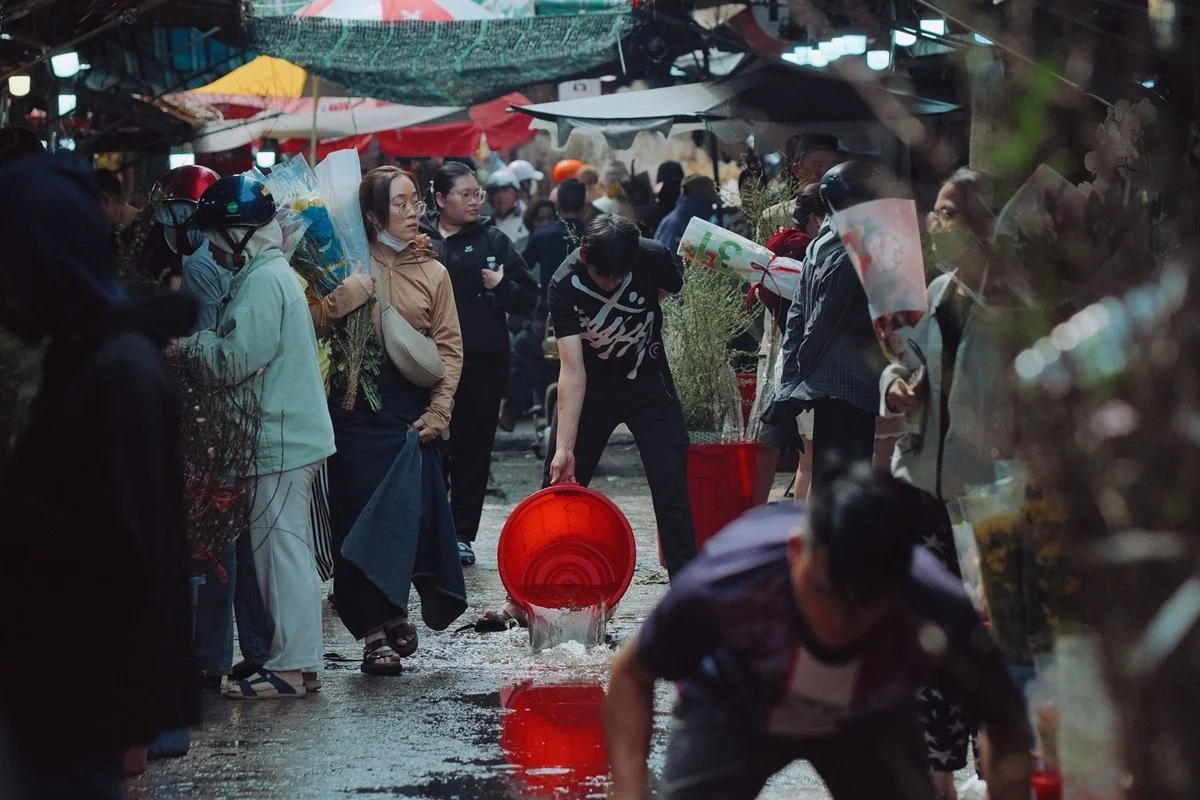
Every August, the seventh month in the lunar calendar, is known as the ghost month in Taiwan. My much older cousin would text me to say, ‘Be careful’ and ‘Avoid going out at night’. I want to joke that I’m in Australia and I’ll be fine here, but I never do. The ghost month is an important part of Taiwanese culture, derived from a combination of folk religion, Buddhism, Taoism, local history and family values. As the gate between the human and spiritual dimensions opens, families prepare tables of food to worship the ancestors and feed the wandering, hungry ghosts to appease them from doing harm to the living. These ghosts include the deceased with no male descendants to carry on the tradition of lighting incense sticks, offering food and burning joss papers, also known as spiritual money.
I have no sons. I have no children and do not wish for any. Like many in my generation, we are divorced, partnered but not married, or happily single, enjoying spending money on ourselves.
It was about 20 years ago that my relatives hassled me to get married, threatening to matchmake me with sons of their friends. I remember telling Grandpa, ‘I don’t think Mum and Dad moved all the way to Australia so that I could come back and marry a man who owns cows.’ At the time, I felt an uneasy sense of superiority, but having graduated with Honours in an Australian university and working in Tokyo at the time, a rural life was not my idea of getting ahead. I knew Grandpa was half joking, but my uncle wasn’t. He knew that he would receive a big red packet from both sides of the family if he succeeded as the matchmaker. The wealthier the families, the bigger the packets. I never married a Taiwanese man, so my parents saved that expense. Instead, I married a Caucasian New Zealander and, now divorced, am happily partnered with a Caucasian Australian. We’re loving life without the responsibility of children. But the price to pay is in my afterlife, when I become a hungry ghost.
I recently learned that most ghosts in Taiwan are female, and this is due to women’s marginalised position in patriarchal Taiwan. It is believed women often carry grievances into their afterlife. Confucius teachings may be less relevant in modern-day Taiwan, but many traditional families, especially in the rural areas, still rely on them to instil order and harmony. Confucius teachings dictate what makes a good woman: that she begins life as an obedient daughter, never disobeying her father, that she marries into a family approved by her father, and she obeys her husband. When her husband dies, she obeys her sons.
The responsibility of bearing children falls on women, and if a woman is a good wife, she will give birth to at least one son so ancestor prayers can continue into the next generation. My childhood friend in Taiwan is living a life that could’ve been mine if my family did not immigrate to Australia. I remember visiting Taiwan when I was 27 years old, and when I met with my friend, she was desperate: she didn’t have a boyfriend and resorted to asking her mum to find a matchmaker who could help her find a husband. I asked her, ‘What’s the hurry?’ and she looked at me like I’d said something stupid. She was married within months of meeting her husband, a man who ran a family business in the countryside.
In rural Taiwan, most women live with their husband and his family, given the ample housing space and the expectations on the daughter-in-law to help her husband look after his parents. My friend had gone from being the favourite child to now occupying the lowest rank in her husband’s family. It is not uncommon for the daughter-in-law to be treated like an outsider until she proves her worth. Two years later, my friend’s ranking in the family elevated overnight when she gave birth to a son, the only grandson of her husband’s family. When I visited her again, she acted like a boss lady, having fulfilled her duty as a mother and a daughter-in-law. My friend has ensured the traditions of the family can continue – there will be no hungry ghosts.
Six thousand kilometres away, I’m living an entirely different life as a divorcee. I gave tradition a try – I was married for five years – but it wasn’t meant to be my life. One of the rituals I saw during my wedding in Taiwan was a pail of water being thrown out on the road. It was a public declaration that a daughter was married off, and the water was not to be – and logically, could not be – returned.
During my marriage, I lived in New Zealand and would often call home to Australia. On one of those calls, I told Dad that I was helping my then-husband with his business. I was shocked to hear, ‘Just listen to him, he knows best.’ Dad didn’t say that because he was business-savvy; he said that because it was a wife’s duty to obey. The business caused financial distress, and my then-husband and I could not agree on many matters. Five years into my marriage, while my friend was being revered, I was breaking my vows and bringing shame onto my family. I thought I was doing what was best for me, and that my parents would understand and welcome me home. I was wrong. The water that was thrown out shouldn’t have found its way home. I had disobeyed my husband. I had disobeyed my father.
For two years, Dad didn’t speak to me. I knew he felt tremendous shame as he did not tell any of his friends about my divorce. He’d invited one hundred and twenty people to the reception in Taiwan and all those joyful wishes and ganbei of glasses were erased with a single decision I made. But I’d seen too many unhappy marriages in my lifetime, and I’d enjoyed too much freedom – freedom of choice – growing up in Australia. I did not rely on a man for my livelihood. That was the last generation. After all, my parents sent me to higher education so I could be financially independent. With this independence, marriage was a journey I could choose to continue or end; marriage was never the pre-determined destination. And without a traditional Taiwanese husband, I did not, and still do not, need to give birth to children, let alone sons.
My parents used to visit Taiwan twice a year to make offerings to my ancestors. Last year, the ancestral altar was moved to a temple as it is becoming harder for my ageing parents to travel. Now, the worshipping of my ancestors is done by temple staff. It’s amusing to see no industry is immune from outsourcing. Who said money can’t buy happiness? My parents and my three sisters have all converted to Christianity. Changing religion is also a convenient way for my parents to dismiss worries about tradition. Now they will never become hungry ghosts.
I remain an incense stick lighter, an offerer of prayers and food. I have always loved temples and the smell of incense. It’s the only connection I have with my grandparents. If I give it all up, I give up family history and a big part of my childhood.
I need to congratulate the ancestors. Someone wise in the ancient times devised solutions to the problem of having only daughters. It is not uncommon to hear of a man adopting his wife’s family name. This way, her family name is carried on, and their son can continue the ancestral worship. This request is often made to a man who has brothers, so his own parents are still looked after in their afterlife. If a daughter does not marry, she has the option of adopting one of her brother’s sons. These are some of the ways to ensure lineage and prevent ancestors from turning into hungry ghosts. But these decisions do not come lightly; they come with expectations, responsibilities and consequences for a lifetime.
Maybe because I’ve lived in Australia for too long, I was always going to be one of those women to challenge tradition – whatever the reason, I accept my fate as a hungry ghost in the afterlife. For now, I’ll live with my choices and make the most of my human life. After all, to be alive is already a wonder.▼
Image: Pew Nguyen - Pexels
If you liked this piece, please share it. And please consider donating or subscribing so that we can keep supporting writers and artists.