The many faces of literary censorship – by Susie Harris
ISLAND | ONLINE ONLY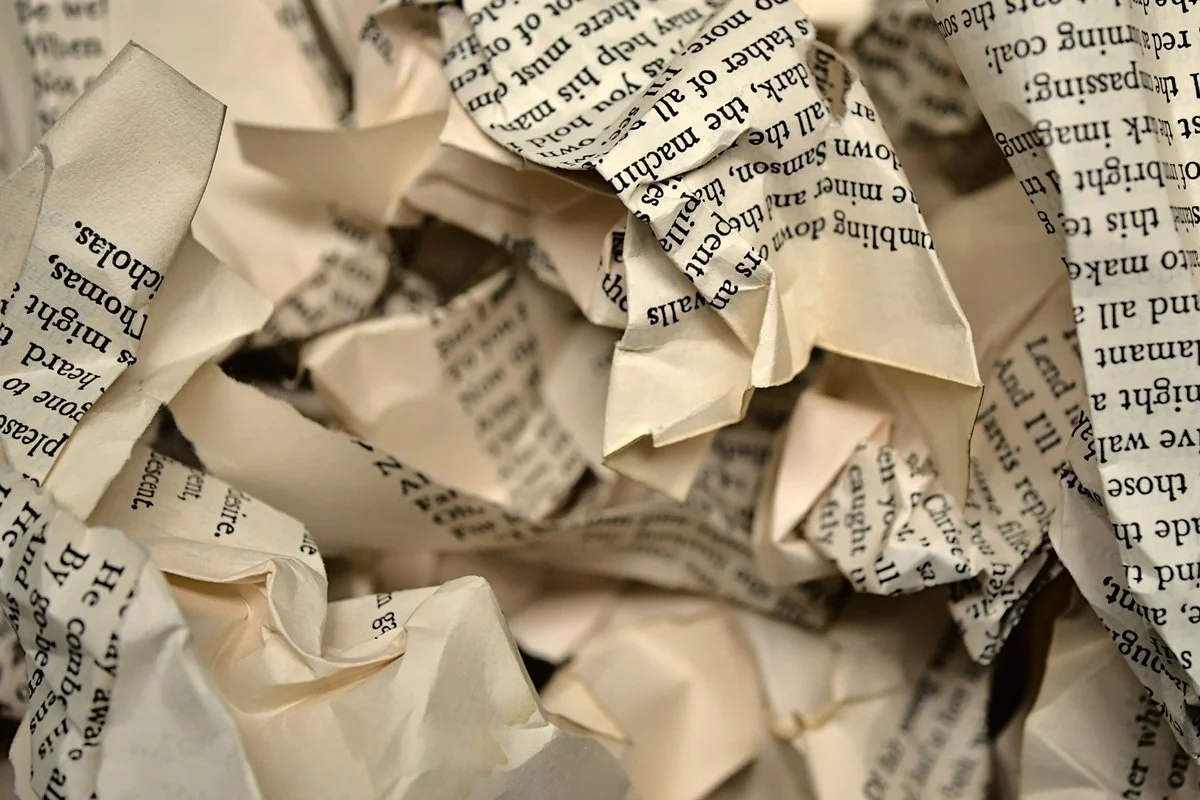
‘It came as a complete surprise,’ says Emily Broadmore, editor of New Zealand-based journal Folly. ‘I had a call from our distributor saying the journal had been pulled from 47 stores.’ Broadmore is referring to a moment from November 2025 in which the journal experienced a case of censorship. Being one of the journal’s featured poets myself, I was initially amused that staff in Whitcoulls bookstores had been instructed to hide Folly under the counter on its launch day, forcing consumers to ask for it like it was a nudie mag from a bygone era. These feelings were echoed by Broadmore. ‘We can make it fun and playful – go and get your contraband, it's under-the-counter,’ she says. ‘But then when we went to a few local stores to check, it just wasn't available. They didn't have it.’
My amusement turned to confusion. Why had the just-released journal vanished?
A representative of the store told Broadmore that Folly’s content was against its family-friendly values, with no further explanation provided. Broadmore says Whitcoulls also warned her against speaking to the media. ‘They held onto the stock for 17 days,’ she says. ‘They charged us to get most of it back but burned some of it down south.’
Folly is self-described as provocative, disruptive, and an unapologetic blend of literary merit with cultural resonance. It won the 2025 Best Indie Publishing Award and the 2024 CLMP Best Literary Debut Award. Weeks after the journal was pulled, the New Zealand Herald reported that the group managing director of James Pascoe Group, which owns Whitcoulls, said its removal was due to the repeated use of the word ‘cunt’. The relevant piece by Nikki Gemell, titled ‘The Cunty Girls’, explores young women reclaiming the term as a form of empowerment. Broadmore says Whitcoulls staff informed her that the behaviour of pulling ‘offensive’ material from shelves was not an isolated incident. ‘Past publishers wouldn’t say anything when it happened so they wouldn’t get blacklisted by the store,’ she says. But the motivation behind the removal is curious, to say the least, when the same store continues to stock an array of books containing conventionally offensive language and erotica.
When silence feels safer than speech, what kind of literature survives? Across the Unites States, books are openly being banned from schools. Australia and New Zealand like to believe we are watching from a safe distance. But unlike Australia’s historical censorship regime, which saw legally enforceable restrictions on what could be published, censorship today takes more subversive forms. It operates quietly, through festival guidelines, publisher gatekeeping, editorial power, library policies and online backlash, shaping what writers say or don’t say in their work.
While Whitcoulls may be entitled to its values, this individual act of censorship is a more serious concern when considered in the current political climate and alongside the controversies that plagued Australian literary festivals last year. The introduction of a code of conduct by the Bendigo Writer’s Festival two days before the event resulted in the withdrawal of more than 50 participants. The document, as reported by ABC News, outlined that writers must ‘avoid language or topics that could be considered inflammatory, divisive, or disrespectful.’ Less than five months later, the board of the Adelaide Festival announced the removal of Palestinian Australian author Dr Randa Abdel-Fattah from its Writers’ Week lineup over the author’s past commentary regarding Israel and Gaza. The board injuriously claimed proximity to the Bondi terrorist attack as its reasoning. A host of Australian publishers and writers immediately issued withdrawal statements in support of Dr Abdel-Fattah, and Louise Adler, the daughter of Holocaust survivors and the director of Adelaide Writers’ Week, followed suit by announcing her resignation in an opinion piece in Guardian Australia, stating, ‘We need writers now more than ever, as our media closes up, as our politicians grow daily more cowed by real power, as Australia grows more unjust and unequal’. Hours later the festival was cancelled.
Examples of institutional-level censorship have been increasing, including Western Sydney’s Cumberland City Council’s 2024 decision to ban books depicting same-sex parenting from its libraries. While Guardian Australia reported that the decision was overturned, it forms part of an alarming trend. In Australia and New Zealand, many literary journals operate within a small cultural ecosystem, where writers, editors and readers often overlap. Folly’s Broadmore describes how this creates issues with accessibility and gatekeeping, both in terms of non-academic writers attempting publication, and the arm’s-length distance at which it keeps a general readership. ‘It’s about who has the right to be present,’ she says, arguing that many university-affiliated publications, while often editorially independent, still exist within institutional and funding frameworks that shape their culture and priorities.
Increasingly, journals also invite contributors to identify their background or lived experience, a move intended to broaden representation and amplify historically marginalised voices. Yet some writers describe a quieter consequence: uncertainty about legitimacy. Who feels authorised to tell certain stories, and who, anticipating scrutiny, decides not to try?
Thai Australian writer and poet Paris Rosemont speaks candidly about the anxiety that can accompany identity-based expectations. ‘Sometimes I feel a little bit of a fraud when people say it’s okay for me to write about certain stuff because of what I look like,’ she says. ‘I feel as Australian as anyone else.’ At the same time, Rosemont has faced racism in her personal life, experiences she channels into her work. She recalls audience members thanking her for telling their stories after a show in which she tackled the topic. For her, the tension is not about representation itself, but about the subtle ways identity can function as both permission and constraint. Her award-winning poetry often embraces sexuality overtly, without restraint, yet she notes a contrast: a male colleague, writing similarly frank work, does not seek to publish his poems out of fear of being labelled problematic by the industry.
The tension between what is permissible and what might be censored or judged is not just theoretical. New Zealand multidisciplinary artist James Watkins recounts having a commissioned poem, which was encouraged to be ‘shocking’ in its explicit nature, heavily redacted and published in such an altered state that it no longer resembled his work. ‘I turned up to get my printed copy and that was the first I heard that it was going to be changed. If they’d asked me, we could have crafted it. I could have edited it,’ he says.
While external pressures clearly shape what reaches print, the subtler, more pervasive form of censorship today comes from within. The digital age has created an environment where writers increasingly anticipate mass critique, backlash, or misinterpretation before a word is even written. In such a climate, censorship rarely needs to be imposed; it is anticipated, internalised and enacted by the writers themselves.
Watkins discusses the shift writers face, commenting how, in times past, people would write letters of complaint to the writer. ‘Now there’s a possibility you wake up in the morning to 50,000 people pointing fingers at you, telling you you’re a piece of shit.’ Watkins worries about what will be lost in modern literature because of this fear. ‘No one wants to take risks anymore. Anytime they do take risks, they get mowed down by people with no ability to think in the grey. Do not pass go, straight to jail.’
From festivals to shelves, the hotspots are clear: writers removed from panels, books pulled entirely, and literature altered in print. Alongside these dramatic moments sits something subtle but just as powerful: the writer who decides a topic is not worth the potential fallout.
Ironically, even this very piece saw a number of small calculations in its creation. If these pressures persist, future literature may be the safe, uncontroversial work that disrupts no one and says nothing. There may be no single authority policing the page, but when caution becomes instinct, and instinct becomes silence, only the most palatable stories reach readers.▼
Image: Michael Dziedzic - Unsplash
If you liked this piece, please share it. And please consider donating or subscribing so that we can keep supporting writers and artists.