
Fucking with Chineseness – by Cherry Zheng
ISLAND | issue 171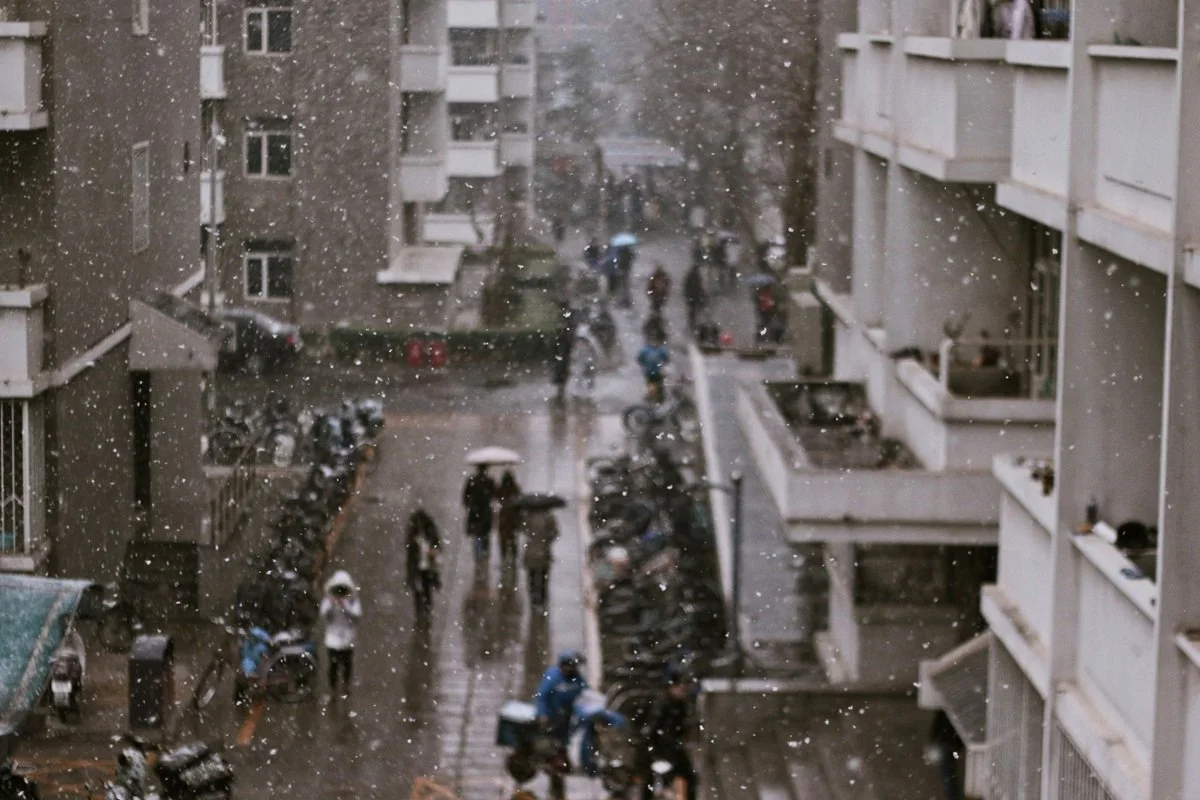
Shaohua couldn’t pronounce his own name. ‘Shāohuaaa,’ he said, like Ron Weasley trying to make feathers fly. It wasn’t for lack of trying.
He had taken to speaking at a plodding pace in order to be understood. For me, sitting beside him, this was the aural equivalent of a very slow flogging.
‘I want to understand China,’ Shaohua said in Mandarin. Blond-haired and baby-faced, he was an international relations major who had just completed an internship at the UN. His name in English was Shane. Five years ago, back in New York, Shane’s Chinese teacher had given out Chinese names like participation trophies to his entire beginner class. Now Shaohua was in Shane’s LinkedIn name, his business cards and his Tantan profile. Shaohua was the name I thought of when I saw him in the classroom corridor, proclaiming that he had already been to karaoke with the locals. ‘Not only we must face the human rights disputes,’ he continued, ‘but also we must consider–’.
‘Incorrect!’ chirped Liu Lǎoshī, standing on her tiptoes to tap the sentence structure at the top of the board. She wore a plaid skirt and copper-blonde plaits. Her handwriting sprinted across the green. Liu Lǎoshī looked like a middle-schooler but wrote like a calligrapher. ‘“We must not only face the human rights disputes, but also consider…”. Now finish the sentence.’
Shaohua groaned at himself. ‘We must not only face the human rights disputes, but also consider opportunities for cooperation, such as in doing business.’
Dirt formed a vignette frame around the classroom window. Outside, the sky was bleached as white as a hospital sheet. It took me a moment to identify a perfect round hole in the middle of the pane as the sun. It would be my turn soon. And I had spent all night revising vocab lists, not political opinions.
‘Excellent! What about you, Yǐnli?’ said Liu Lǎoshī, pouncing on my lapsed attention. ‘What do Australians think?’
‘I’m Chinese-Australian,’ I spluttered. Fluorescent lights bounced off fluorescent tiles and slapped me in the eyes. Becoming the token Australian was a new experience. It gave me an uncanny feeling of stage fright.
What I really wanted to know was, ‘What does Liu Lǎoshī think?’ She was studying for her Masters at Peking University, the top university in the country, and had tried to relate to us by reciting Dickens and Shakespeare in Mandarin. Beneath Liu Lǎoshī’s fluttery professional bearing, I realised she was trying just as hard to impress us – the students – as we were trying to impress her.
2
Mired in the immigrant guilt of Never Being Good EnoughTM, I encountered an essay published in 1996 called ‘Fuck Chineseness’[i]. In it, postcolonial scholar Allen Chun reminds us that Chinese culture has never been uniform. Zhōngguo 中国, the ‘Middle Kingdom’, refers to the fact that China, throughout history, regarded itself as a civilising centre for diverse peoples with their own languages and beliefs in opposition to foreign barbarians. Despite the rise and fall of dynasties, repeated invasions, fluctuations of territory and adoptions of foreign religions, Chinese people have held on to a sense of unbroken continuity. Southerners, like my family, have historically constituted the vast majority of Chinese diaspora throughout Southeast Asia, Australia and beyond.
Growing up, my Mandarin was strained through a provincial Cantonese accent and cobbled together by English grammar patterns. It was not enough to understand Chinese song lyrics or the quickfire colloquialisms of international students. It was never enough to win an argument against my parents.
That’s why I majored in Chinese at university. I was surprised to find it was a popular language. I couldn’t fathom why the non-Chinese were there. For me, learning Mandarin wasn’t a career move, something worthwhile because ‘China was rising’. It was not something to fall into because French class was full. My endgame was ‘passing’. I wanted to be indistinguishable from a native.
After three years of classes, I was awarded a New Colombo Plan scholarship by the Australian government. The ‘old’ Colombo Plan of the 1950s had sponsored thousands of South and Southeast Asian scholars to come to Australia. Now Julie Bishop was flipping the script. Asia was about to be swamped by Australians, and I would be one of them.
I scoured the web and applied for the most advanced immersion program my scholarship could afford. My ‘advanced immersion’ was actually my second time in Běijīng. The first time was to celebrate finishing Year 12. My mother signed us up for a tour of the Forbidden City, which cost $99. We spent a week confined in scam silk, tea and jade shops in the chattering dead of winter. At the last stop, my mother snapped. ‘You are so young, go and do something better with your lives,’ she bellowed at the sales assistants, who had spent the last five hours trying to coax us into buying peony bedsheets. I had never seen my mother orate with such passion. One of the women started to cry. We were finally released when my mother bought a knock-off qipao dress off the single mannequin in the whole showroom. It might have just been for decoration, but it fit me well enough.
When we reached the hotel, a clerk dressed in funereal black asked for our details. My tongue tripped on itself and I watched, from a dissociative distance, as the clerk’s lipstick tilted up. We both realised, at the same time, that I didn’t even know the characters in my mother’s name.
This time, I was back in Běijīng alone. It was the summer before COVID, and the sky was the gentle blue of air pollution reform. Foreign tourists queued outside the paved and painted gardens of the Old Summer Palace, which were ravaged by the British and French during the Opium War. Next door, Chinese children queued with their parents outside Peking University’s metal security barriers to glimpse the school of their dreams. And in one of the auditoriums, under a symphony of aircon vents, I would soon sign a pledge to not speak English, shoulder to shoulder with Ivy League kids who were here to learn one of the US Government’s Critical Languages. My time had come.
3
Shǐming使命 is a mission or a duty to which you devote yourself. It is made up of the characters使 ‘envoy’ and 命 ‘to order or command’ (also ‘life, destiny’). When I first learned the word, I misheard it as Sǐming 死命, 死 meaning ‘death’. To me, this made perfect sense. According to Blond Shaohua, I was ‘the least chill Australian he had ever met’.
死命possessed me in Běijīng. I rose at dawn to press words into my eyeballs and fell asleep at midnight with essay paragraphs wriggling through my dreams like overfed fish. I handwrote characters until I needed Band-Aids. I shuffled to and from the classroom, earphones in, mumbling along to audio recordings of each day’s texts. I read my first Chinese novella and, unimpressed by the English translation circulating like contraband around the corridors, I wrote my own.
For eight weeks I scarcely left campus, save for a trip to the hospital. My complaint was fatigue. I was struggling to climb the stairs to class. The nurse hooked me up to an IV drip. I thrilled at the cold flushing through my veins. It felt like a victory, discovering the limits to which I could push myself.
During stretches of insomnia, I wondered why I was trying so hard. Part of it was a deranged belief that I could do anything I wanted. But it also had something to do with my Chineseness. Until now, Chinese had been a cramped world made up of just three people who did not understand each other. English was the entire rest of the universe.
Now I was cramming myself full of Chinese. Every day was gluttonous: new texts, new idioms, new patterns. As I lay in bed on my back, belly bloated with half-digested characters, even the darkness wobbled like a screen of ink, brimming with brushstrokes and radicals.
‘Can you read my essay?’ I asked my parents over WeChat, between bites of vegetable bun.
‘Of course,’ my father said immediately. ‘I used to be a teacher, you know.’
‘Just a quick look. For obvious mistakes.’
I checked my work twice as hard before I hit send. My family never read my writing. Chinese was for domestic errands, parental lectures and recounts of my day. I had grown comfortable in the privacy of my English. My parents replied less than an hour later. They didn’t use track changes, so the document ballooned with brackets.
Since its establishment in 1958, CCTV has possessed the aspiration to (aspired to) become the leading source of news in China. At the same time, CCTV is responsible for acting as the Party and government’s propaganda organ. That this has given CCTV a bad name (This counterproductive effect), especially among young people, is undeniable. Adding to this is the profit motive of the modern market economy, meaning that it has three different goals that are difficult to manage. (These three different goals are difficult for CCTV to manage)
‘You’ve learned so many big words,’ my mother said. ‘Your Chinese is better than my English already.’
‘You can do tax returns in English,’ I said.
My mother hesitated. I could hear the washing machine churning.
‘I don’t know what they’re teaching you in university,’ she said, enunciating the last word like it was a foreign city, ‘but the US has problems too. They’re not all about freedom and democracy.’
‘Yes. Yes, of course. The topic is Chinese media.’
My mother kept answering in Cantonese when I asked her for words I didn’t know.
‘Mandarin not Cantonese,’ I snapped, with deadlines closing around my throat. I immediately regretted my temper. Běijīng was still 2000 kilometres away from my parents’ home towns. My mother grew up speaking a Sze Yup variant of Cantonese. Mandarin was not her mother tongue.
Cantonese has somewhere from 60 million to over 100 million speakers worldwide. Once a contender for the official Chinese language, it is now morphing into a language of protest and periphery: eroded by Mandarin in Guangzhou, graffitied throughout the streets of Hong Kong, and preserved in pockets of ageing overseas communities. I myself am not fluent. My parents raised me speaking Mandarin – deciding, along similar lines to Shaohua, that it was the most useful language.
4
Liu Lǎoshī had whispered to us in the slim minutes between classes how competitive it had been to get admitted into the program as a teacher. So, when it was Headmaster Deng’s turn to lecture us, I set my expectations high.
Headmaster Deng was waiting for us in the classroom – the only man in the faculty. He was beady-eyed and flat-faced, like a Lego person made real. He was at least two decades older than Liu Lǎoshī, with yellow radish calves poking out from khaki shorts. Headmaster Deng handed out black-and-white photocopies of an old news article from 2012. It was something about an American businessman found dead in his hotel room in Chongqing. The accompanying image, fried in black ink, might as well have been abstract art. Headmaster Deng had either forgotten his textbook or hadn’t deigned to bring it, which meant my precious highlights and annotations on the writings of President Xi Jinping had gone to waste. I seethed in silence at the injustice of professionalism. Only a man could get away with this.
‘By now, you’ve written enough essays about yourself,’ said Deng Lǎoshī. ‘Your homework will be to look into the childhood of a contemporary Chinese political figure.’
On the old projector, his PowerPoint slide was washed out and slightly off-centre – the edges spilling onto the wall. I clambered gingerly through the sentence constructions of the obscure Xi Jinping quote as though in a real construction zone: ‘People who haven’t really ever had power, who have always been far removed from it, tend to think these things are mysterious and novel. But when I look past the superficial stuff – the power and bouquets, the glory and applause – what I see is detention centres and fickle human relationships. I have a deeper understanding of politics.’ [几乎从不曾有 过权力的人,那些一直距离权力很遥远的人,往 往认为这些东西是神秘、新奇的。但我穿透表面 的东西—权力和鲜花,荣耀和掌声—去看,看到 的是看守所,是浮躁的人际关系。对政治我有更 深层的了解。][ii]
Behind his dowdy spectacles, Deng Lǎoshī’s black eyes egged us on with a sense of irony that made me feel like I was two steps behind in a chess match.
That night, I trudged through old online articles about former Chongqing Party Secretary Bo Xīlai, whose name had appeared in Deng Lǎoshī’s handout. Everything I read was unfamiliar, in that I had never seen it expressed before in Chinese. The meanings always slammed into me after a delay, like symptoms after initial exposure. Gradually, the new vocabulary settled with a clammy chill inside my bones.
Bo Xīlai was just 17 when the Cultural Revolution began, old enough to be imprisoned along with his father, senior party figure Bo Yībō. He had participated in his father’s beatings.
‘Seeing him disown his own relatives and mercilessly beat even his own father half to death,’ says Bo Yībō, ‘I thought, this kid really is leadership material for the future of our party. I am certain he has great prospects’. [看他这个六亲不 认,手毒心狠连他爹都往死里整的样子,这小子 真正是我们党未来的接班人的好材料。今后肯定 会有大出息。] [iii]
I included the full quote in my presentation. I could see my classmates skimming the slide with mild incomprehension. ‘Bo Xīlai was Xi Jinping’s political rival,’ I said. ‘This man could have been the President.’
Headmaster Deng’s eyes glimmered as he met my gaze. ‘Chairman Xi’s generation all grew up during that period.’
The Cultural Revolution began when Xi Jinping was 13. His schooling ended, his father was thrown in jail, and his half-sister likely suicided due to persecution. For all I had navel-gazed about intergenerational trauma, I had never once paused to think about the traumatised little boys who rule the world.
5
Today, the political fault-lines of language are fossilised in Mandarin’s different names: Pǔtōnghua普通话 (‘common language’) in the mainland, Guoyǔ國語 (‘national language’) in Taiwan, and Huayǔ华语in Singapore (‘Chinese language’, vis-a-vis the other national languages). The designation ‘Chinese’ in English elides all of these into a single amorphous mass, and that’s before one includes the other languages of China.
Before my immersion program, I named my White boyfriend when he started learning Mandarin, using a mix of translation and personality matching. We spent an afternoon in his wood-toned family home scrolling through Chinese baby names, surrounded by books by his mother and paintings by his father. Boys had names like heroic, clever, brilliant. Girls got named after snow, jade and flowers.
My Chinese name was a forgotten heirloom. No one in my family used it. It existed in no official documents. But it was still a gift from my parents. Yǐn is my mother’s surname; Li means jasmine. For my birthday, my boyfriend drew my name, filling the strokes with leaves and petals. I discovered the meaning of ‘porcelain smile’ when I saw that he had mixed up the characters.
In Běijīng, Yǐnli was a ragged cat inviting itself home. It slipped with ease into Mandarin sentences. It sounded very feminine, according to Liu Lǎoshī. This was a compliment; she complained that her own name sounded like a man’s. I tried perfecting the shape of the strokes, the way I doodled my English name on used envelopes in primary school. But I never got the balance right: it always looked so much prettier in Liu Lǎoshī’s handwriting.
From a continent away, my Australian problems fit in the palm of my hand. I broke up with my boyfriend from my Běijīng dorm, feeling relieved more than anything to discard my mental rehearsals of him meeting my family. I put my phone back in my pocket and went to climb the Great Wall of China. The tissue box I had prepared was left unopened on my bedside table.
Over those weeks, a battalion of teachers wrung the Cantonese out of me, moulding my tongue around zhs, chs and shs until the pronunciations set like clay, fixed into shape. One night, I called my parents and was struck by the thickness (or rather, sibilant thinness) of their accents. Headmaster Deng had succeeded. I no longer sounded like home.
‘I’m so jealous,’ Blond Shaohua said, resigned, as his toneless East Coast accent held firm. He turned out to be pretty good at karaoke. Singing in Chinese didn’t require mastery of tones.
6
‘The blood of the Chinese nation flows through [overseas Chinese],’ Xi Jinping says. ‘The vast overseas Chinese compatriot population has sincere patriotism, great economic strength, rich intellectual resources, and extensive business connections. They are an important force in realising the Chinese Dream.’ [长期以来,一代又一代海外侨胞, 秉承中华民族优秀传统,不忘祖国,不忘祖籍, 不忘身上流淌的中华民族血液… 广大海外侨胞有 着赤忱的爱国情怀、雄厚的经济实力、丰富的智 力资源、广泛的商业人脉,是实现中国梦的重要 力量。] [iv]
Compared to thousands of years of recorded Chinese history, the Chinese nation-state is a very recent invention. But it is an invention that enables the present political leadership to define exactly who they would like to include and exclude in their vision for China. I am at least Chinese enough for the President, if I buy into his dream.
Let us never forget that, much like my own sense of Chineseness, the Chinese nation was made. The Revolution of 1911 ended the imperial system and established the Republic of China in its place. Chinese intellectuals started creating the idea of China synonymous with the nation-state, borrowing the word for ‘nation’ itself directly from Japanese. Even the national language had to be designed, with a standardised pronunciation based on the Běijīng dialect. As Allen Chun argues, the idea that Chinese culture refers to distinct traits and traditions bounded by an unambiguous political entity is ‘essentially modern, if not national, in origin’.
The President is Chinese enough for me, if he admits our shared history.
‘You’re different from the others,’ Headmaster Deng told me after my final spoken exam. My reflection sagged in his eyeglasses. I wondered what he saw.
We were alone in the classroom. Sleep-deprived and stuffed full of words, I felt as though I had fallen into one of the dogeared YA fantasy novels of my adolescence. Sunlight slanted in through the white-grey smog and illuminated faded Chinese characters written over and over each other, radicals clashing, strokes tangling. My vision bristled with upside-down chair legs.
‘You have the mind of an academic,’ he said. ‘What are your plans after you graduate?’
This was a conversation I had not studied for. ‘I’m not sure yet. Work for government, I think.’
‘Work for the government of Australia? That would be a waste.’
‘I’m an Australian citizen.’
‘You study like a Chinese.’
There it was: the recognition of Chineseness that had eluded me, making Běijīng feel even more dislocating than my liminal existence in Sydney. All it had taken was pushing my body and brain to the brink.
I basked in the moment, biting back a smirk. ‘My home state of New South Wales has a special policy called the selective school system. Have you heard of it?’
He hadn’t. I explained the Year 6 exam, the ranking systems, the students who knew the syllabus better than the teachers. Deng Lǎoshī’s eyes lit up with familiar humour, that sense of a punchline on a horizon I could not see.
‘It’s filled with the children of migrants,’ I said. ‘I genuinely didn’t realise how many White people there were in Australia because I spent all my time at school or studying.’
The headmaster threw back his head and guffawed. ‘There’s no escape for us Chinese, is there?’ With that, he dismissed me from the classroom for the very last time.
7
After all that, my Mandarin still hobbled behind my English. I felt like a barbarian next to Liu Lǎoshī, whose glowing foundation and genteel elocution held fast at all times of day. I was attuned to very little of Chinese pop culture; I had few Chinese friends (Chinese-Chinese, as opposed to Chinese-Australian or, as was now the case, Chinese-American). Everything from the clothes I wore to the way I introduced myself – indeed, the fact that I had to introduce myself – marked me as a foreigner.
In Australia, my Chineseness was more than enough. I looked Chinese, I spoke Chinese, and my migrant parents shaped my earliest memories and values. I could wave around a dance fan or drench a stir-fry in soy sauce and call it my culture and Australia, eager to brandish its badge of multiculturalism, egged me on.
Never had I felt less Chinese than when I was actually in China. Even if I somehow learned the political subtleties and cultural touchstones, I still held an Australian passport: I was not allowed to stay and I had the luxury to leave. Whatever belonging I had imagined myself finding and easing into like a hanfu robe…I did not find it at school in my homeland. ▼
[i] Chun, A (1996) ‘Fuck Chineseness: On the Ambiguities of Ethnicity as Culture as Identity’ boundary 2 23, no. 2: 111-38. See also his book sequel, Forget Chineseness: On the Geopolitics of Cultural Identification (Albany: SUNY Press, 2017).[i]
[ii] Kǎi ruì凯瑞, ‘Cóng yáodòng dào diānfēng: Xíjìnpíng sīxiǎng de fǎ zhǎn lìchéng’ 从窑洞到巅峰:习近平思想的发展历程 [From the cave to the apex: the development of Xi Jinping Thought], 13 October 2017 https:// www.bbc.com/zhongwen/resources/idt-sh/Thoughts_Chairman_Xi_ chinese accessed 11 April 2024
[iii] Qiáo qiāo乔劁, ‘Chuài duàn qīn diē sāngēn lèigǔ báo xī lái guǎn hēishèhuì lǎodà jiào diē’ 踹断亲爹三根肋骨 薄熙来管黑社会老大 叫爹 [Breaking three of his father’s ribs, Bo Xilai calls underworld leader ‘father’] 19 October 2009 https://m.renminbao.com/rmb/articles/2009/10/19/51314.html accessed 11 April 2024
[iv] Xinhua, ‘Xíjìnpíng: Zhōnghuá wénhuà shì hǎi nèiwài zhōnghuá érnǚ gòngtóng de hún’ 习近平:中华文化是海内外中华儿女共同的魂 [Xi Jinping: Chinese culture is the spirit shared by all Chinese people at home and abroad] 6 June 2014 http://www.xinhuanet.com/politics/2014-06/06/c_1111025922.htm accessed 2 March 2024
Image: Yuan Wang - Unsplash
This essay appeared in Island 171 in 2024. Order a print issue here.
If you liked this piece, please share it. And please consider donating or subscribing so that we can keep supporting writers and artists.
This essay won the Island Nonfiction Prize, which was supported by the Copyright Agency’s Cultural Fund.